
Last updated September 21, 2026
Full 25-point door and opener safety check with every visit - springs, cables, rollers, tracks, and your LiftMaster or Chamberlain opener included
You get a price before we start. It does not change when the truck arrives.
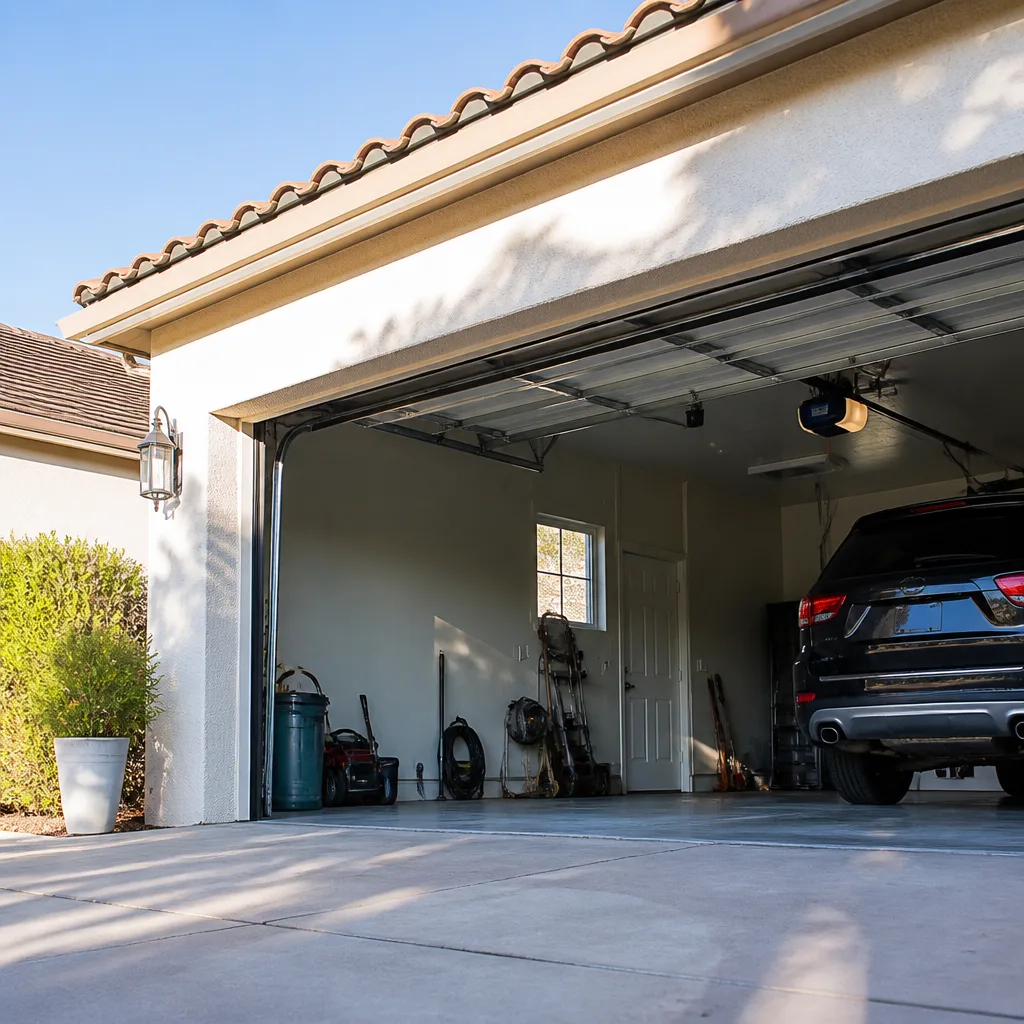
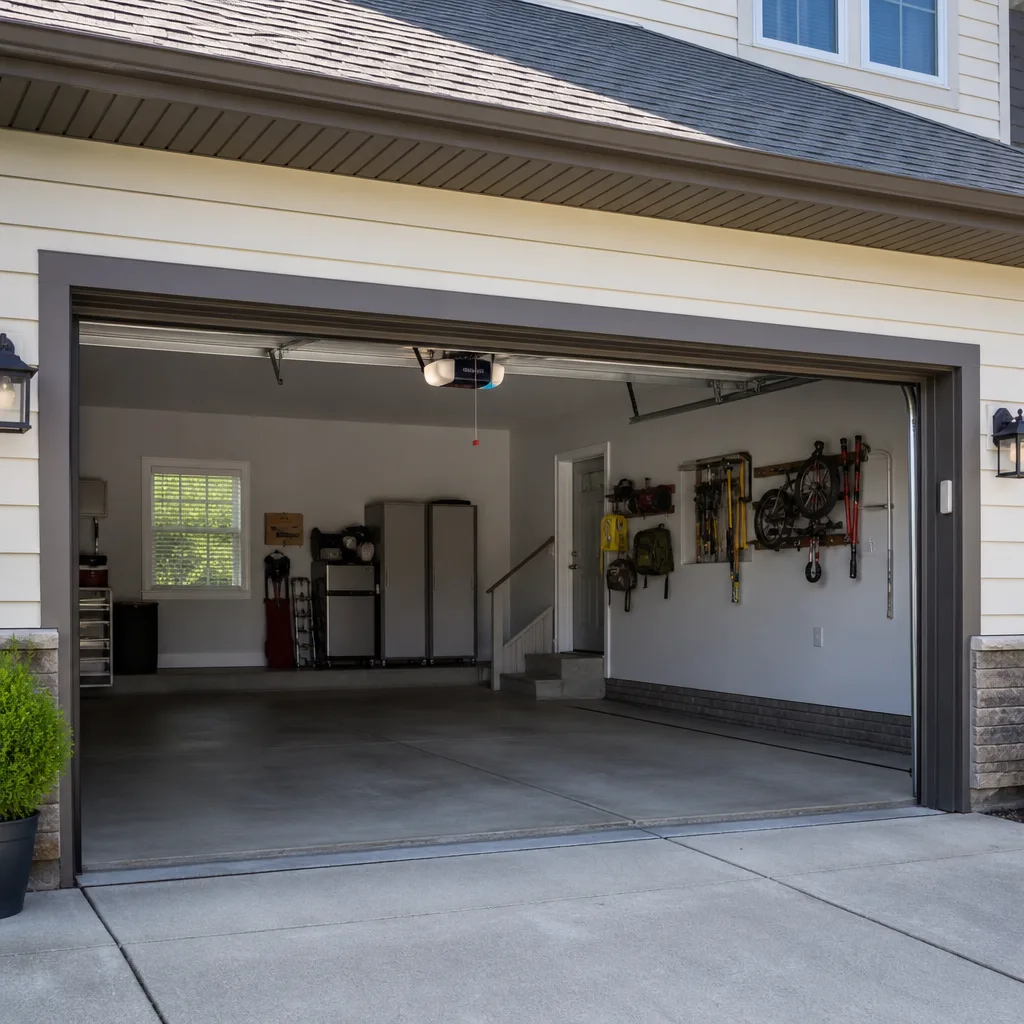
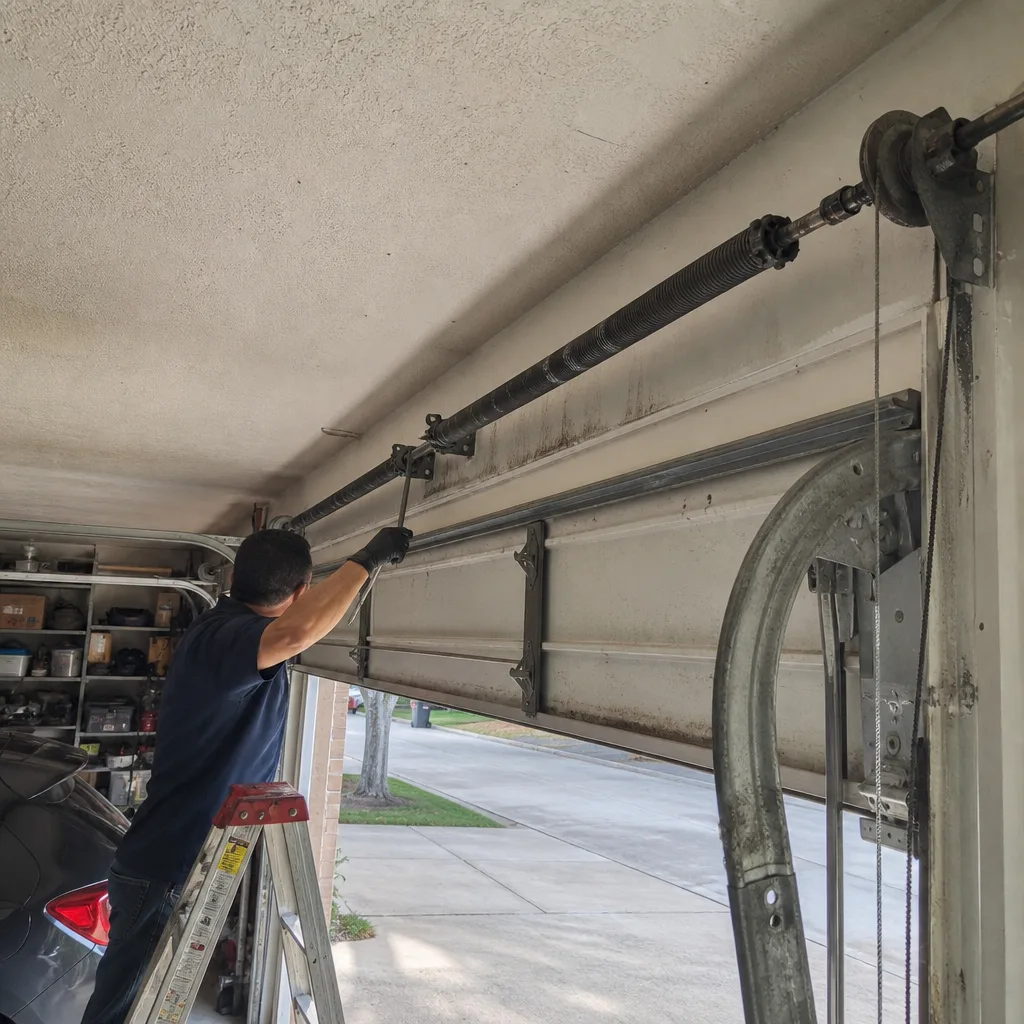 Before
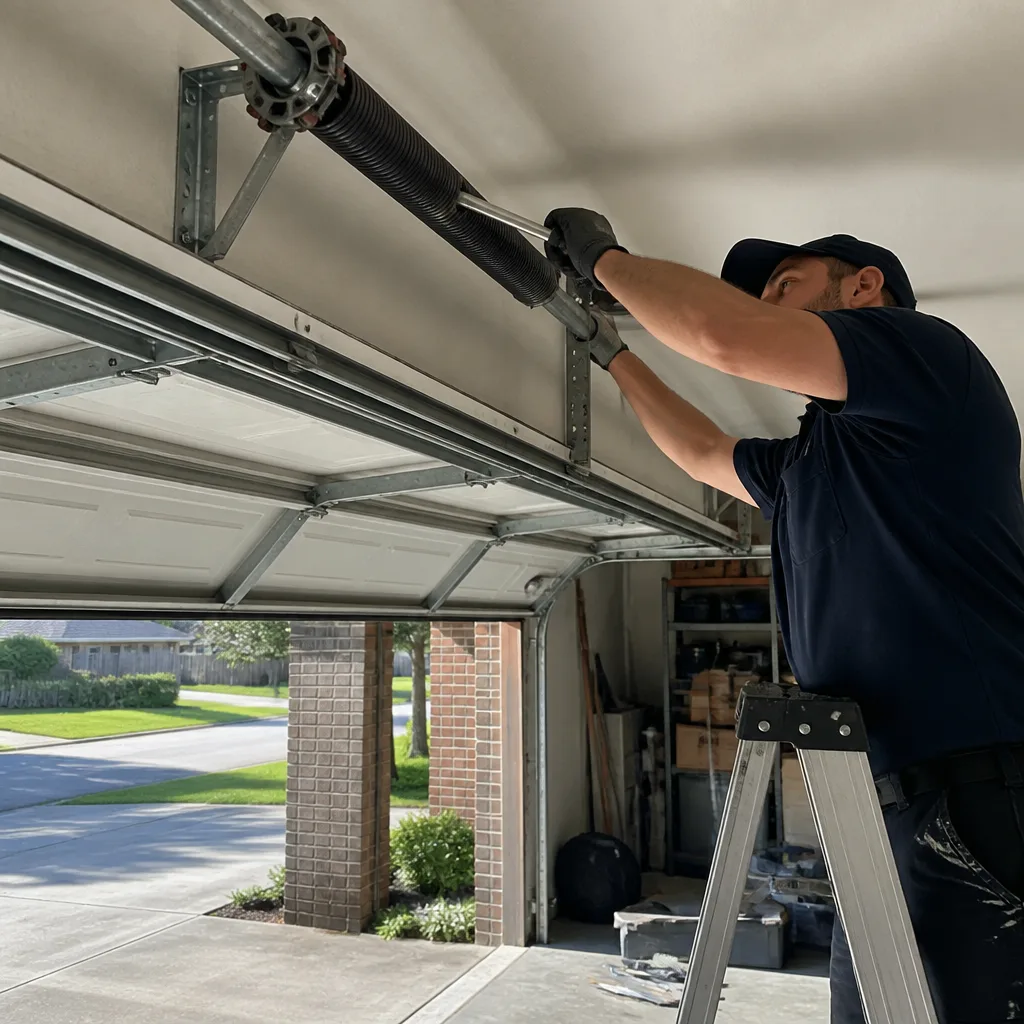 After
After Before
 After
After Before
 After
AfterGarage Door Permits, Codes & Inspections in TX: What You Need to Know
If your garage door replacement involved widening the rough opening or adding a dedicated 20-amp circuit for the opener, a permit was likely required under Harris County building code. And if the contractor didn’t pull one, the liability for the unpermitted work transferred to you at the moment you signed the invoice. Most homeowners in Atascocita assume their contractor handled permits, or worse, that garage doors never need them at all. This guide maps exactly when a permit is required in Harris County, how to verify whether one was pulled for your address, and what unpermitted work costs you at resale. For related reading, see our Garage Door Warning Signs: A Atascocita Homeowner’s Reference Guide.
Quick Answer
Texas does not require a statewide garage door permit, but Harris County and Atascocita-area municipalities require permits for three specific triggers: structural modification to the header or rough opening, new electrical circuits for the opener, and fire-rated door replacement between the garage and conditioned living space. The homeowner, not the contractor, is legally responsible for ensuring permits are obtained, though many reputable garage door companies in Atascocita include permit handling in their scope. If you’re selecting a company, our How to Hire a Garage Door Contractor in Atascocita: A Step-by-Step Guide covers what to verify.
Table of Contents
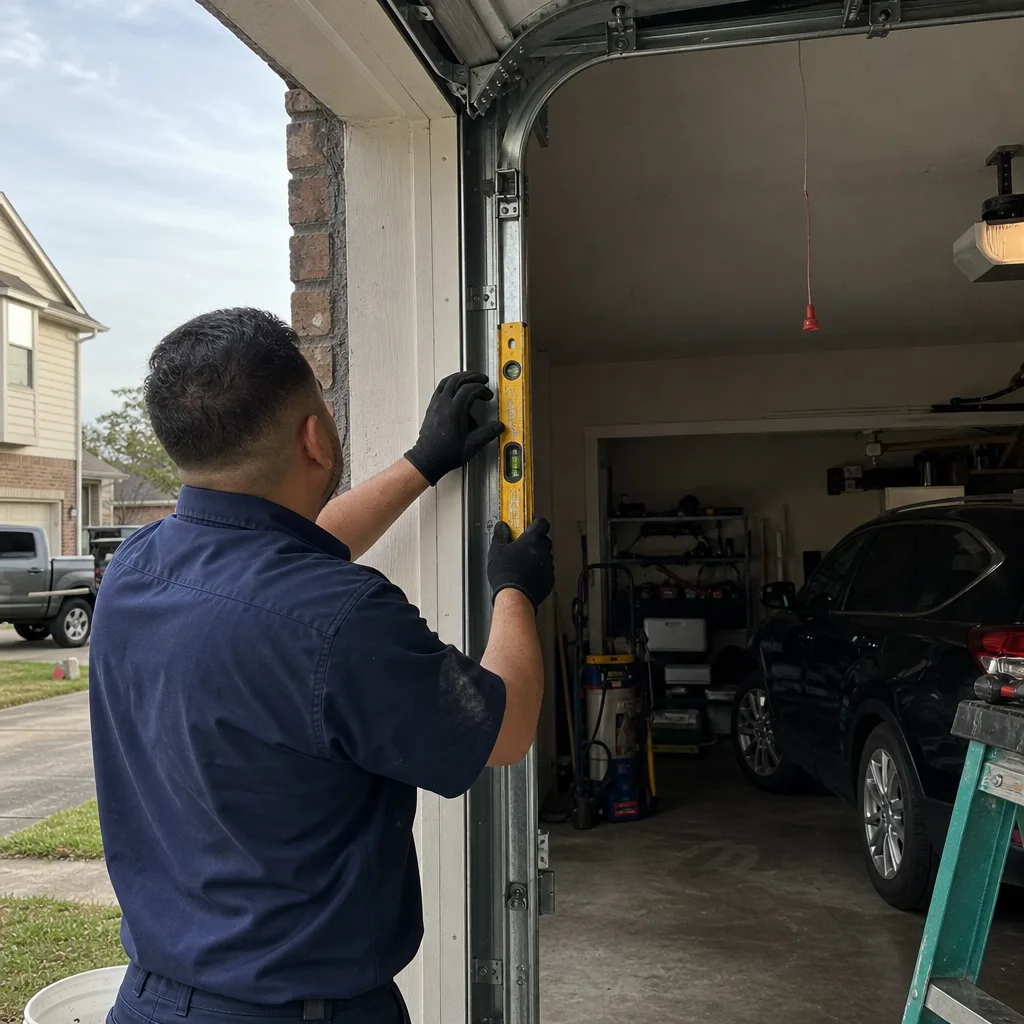
- When Is a Garage Door Permit Required in Harris County?
- The Three Specific Harris County Triggers Most Contractors Skip
- How to Check Whether a Permit Was Pulled for Your Address
- Texas Accessibility Standards (TAS) Opener Requirements in Atascocita
- Wind Load and Wind Code Requirements for Harris County
- What Happens at Resale: Unpermitted Work and Buyer Inspections
- Who Is Responsible for Pulling the Permit?
- Common Mistakes to Avoid
- When to Call a Professional
- Frequently Asked Questions
 Before
 After
AfterWhen Is a Garage Door Permit Required in Harris County?
Texas operates under a decentralized building code system. The state adopts base codes through the Texas Department of Licensing and Regulation, but enforcement falls to counties and municipalities. Harris County, which encompasses unincorporated Atascocita and surrounding areas, enforces the International Residential Code (IRC) 2021 with local amendments through the Harris County Permits Department.
For garage door work specifically, Harris County does not require a permit for like-for-like replacement: swapping a 16×7 foot non-insulated steel door for another 16×7 foot non-insulated steel door, using the existing opener on its existing electrical circuit, with no structural changes. This covers perhaps 60% of residential garage door replacements in Atascocita.
Everything else triggers permit requirements. The county’s logic is straightforward: garage doors are the largest moving component in most homes, they’re structural elements that transfer wind loads to the building frame, and opener electrical work touches life-safety systems. A permit ensures an independent inspector verifies the work before the homeowner assumes the risk.
We’ve been operating in Atascocita since 2015, and we’ve seen the aftermath of unpermitted work during resale transactions. The pattern is consistent: a homeowner in Kings Manor or The Groves calls us for a pre-listing inspection, we document the non-compliant header or the unpermitted electrical run, and the seller faces a choice between delaying closing or absorbing a $2,000-$5,000 price reduction. The permit cost, by contrast, typically runs $150-$400.
The Three Specific Harris County Triggers Most Contractors Skip
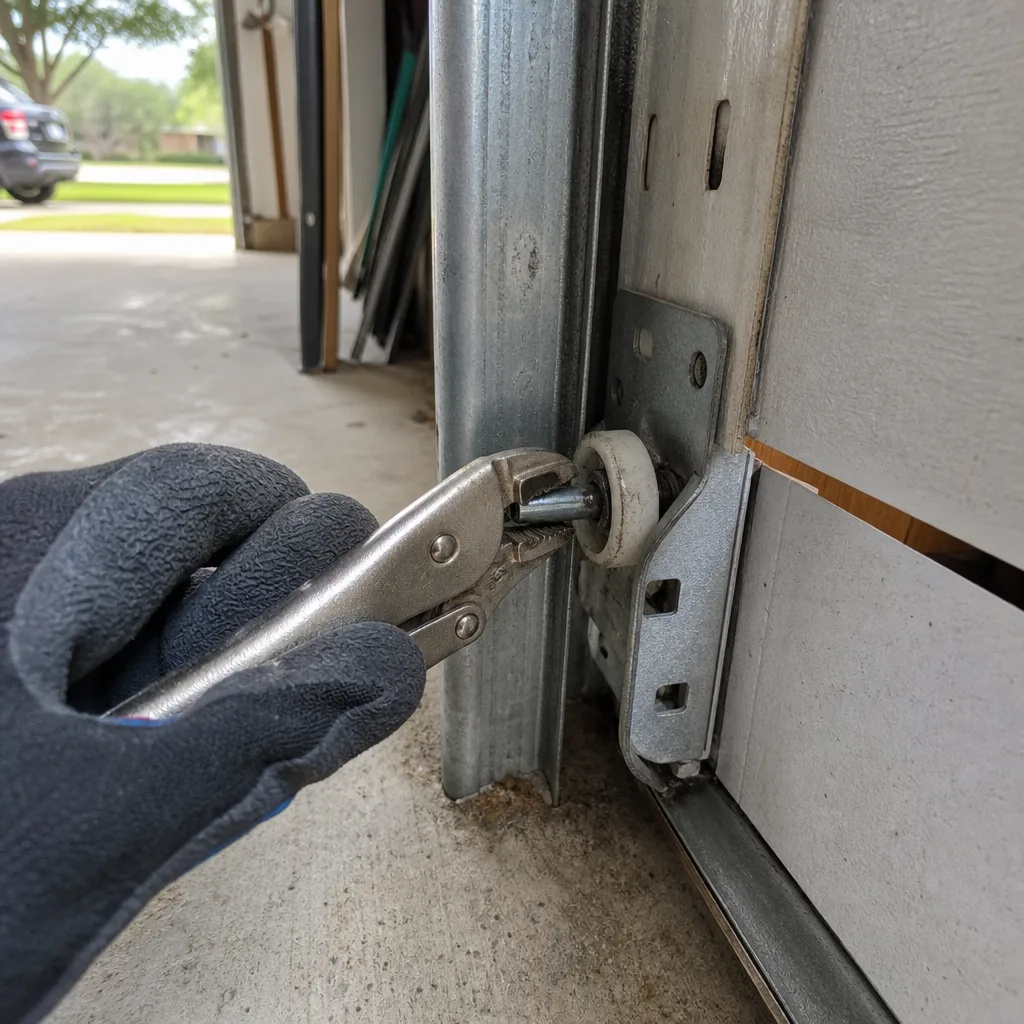
Most permit violations we encounter in Atascocita trace to one of three triggers. Contractors know them. Many choose not to mention them because permit delays add 3-10 business days to a job, and the contractor who promises “same-day installation” wins the bid.
Trigger 1: Structural Modification to the Header or Rough Opening
Any change to the structural opening requires a permit and inspection. This includes:
- Widening the rough opening to accommodate a larger door or a double-car conversion
- Raising the header height for a taller door (RV-height doors are increasingly common in Atascocita’s newer subdivisions)
- Replacing a rotted or compromised header with new lumber or engineered lumber
- Modifying king studs, jack studs, or the load path above the opening
The header above a garage door carries roof and second-floor loads. In Harris County’s 130-mph wind zone, it also anchors the wind-load reinforcement that keeps the door in its track during a storm. An inspector verifies the header size against the IRC span tables, checks the fastening schedule, and confirms the wind-load connection details match the engineering on the door’s certification label.
We’ve replaced headers in Atascocita homes where the previous contractor used a single 2×10 for a 16-foot opening, when the IRC requires a double 2×12 or engineered equivalent. The door operated. The homeowner didn’t know. The problem surfaced when a windstorm pulled the track from the frame because the header deflected enough to loosen the lag bolts.
Trigger 2: New Electrical Circuit for the Opener
Adding a new dedicated circuit for a garage door opener requires an electrical permit in Harris County. This applies when:
- The home’s existing garage circuit cannot support the opener’s load and a new 15-amp or 20-amp dedicated circuit is run
- A new outlet is installed at the opener location where none existed
- The opener installation involves extending the home’s electrical panel or subpanel
The IRC requires garage receptacles to be GFCI-protected. Harris County enforces this strictly. We’ve seen unpermitted installations where a contractor tapped an existing garage light circuit, skipping GFCI protection to avoid the permit. It’s a code violation and a shock hazard in a damp garage environment.
Opener manufacturers including LiftMaster and Chamberlain specify minimum circuit requirements in their installation manuals. A ¾-horsepower opener on a 15-amp shared circuit with a refrigerator or freezer will trip breakers. The correct solution is a dedicated 20-amp circuit with GFCI protection, properly permitted and inspected.
Trigger 3: Fire-Rated Door Replacement Between Garage and Living Space
This is the trigger most homeowners miss entirely. If your garage is attached to your house, the door between them must be fire-rated, self-closing, and have a tight seal. Replacing this door, or modifying its frame, requires a permit in Harris County because it affects the home’s fire separation and life-safety compartmentalization.
The requirement applies to:
- Replacing the existing fire-rated door with a new one (even like-for-like)
- Converting a window in the garage-to-house wall to a door
- Any modification to the door frame that could compromise the fire rating
The IRC requires a 20-minute fire-rated door in this location. The door must be labeled with its fire rating, typically on the hinge edge. Self-closing hinges or a door closer are mandatory. We regularly find in Atascocita homes that the previous owner removed the self-closing device for convenience, or replaced the fire door with a standard hollow-core interior door during a DIY renovation. Both are code violations that a home inspector will flag.
How to Check Whether a Permit Was Pulled for Your Address
Harris County maintains a public permit portal that most homeowners don’t know exists. You can verify permit history for any address, including work performed before you owned the home. This is useful when buying, selling, or verifying a contractor’s claims.
- Navigate to the Harris County Public Infrastructure Department permit search: Search “Harris County permit search” and select the official county portal. The URL contains harriscountytx.gov.
- Enter the property address exactly as it appears on tax records: Use the street number and street name only, omitting unit numbers for single-family homes. For Atascocita addresses, this typically means the format “12345 Lake Houston Parkway” or similar.
- Select the date range: For recent work, search the past two years. For older work, extend to five years or the duration of your ownership.
- Review permit type and status: Look for permits labeled “Building,” “Electrical,” or “Combination.” A garage door structural modification appears under Building. Electrical work for the opener appears under Electrical. Approved permits show inspection results. Expired or revoked permits indicate work that was never completed to code.
- Request a permit history letter for complex cases: If the online records are unclear, call Harris County Permits at their listed number and request a formal permit history. There may be a small fee for printed records.
We encourage every homeowner in Atascocita to check permit history before hiring any contractor for structural, electrical, or fire-door work. A contractor who cannot provide a permit number for past similar work is a contractor who likely leaves permit liability with the homeowner. At Servo Garage Doors Atascocita home, we document permit numbers in our job records and provide them on request, tracing to Clause 4 of The Haven Standard: the customer sees the documentation before anyone asks for trust.
Texas Accessibility Standards (TAS) Opener Requirements in Atascocita
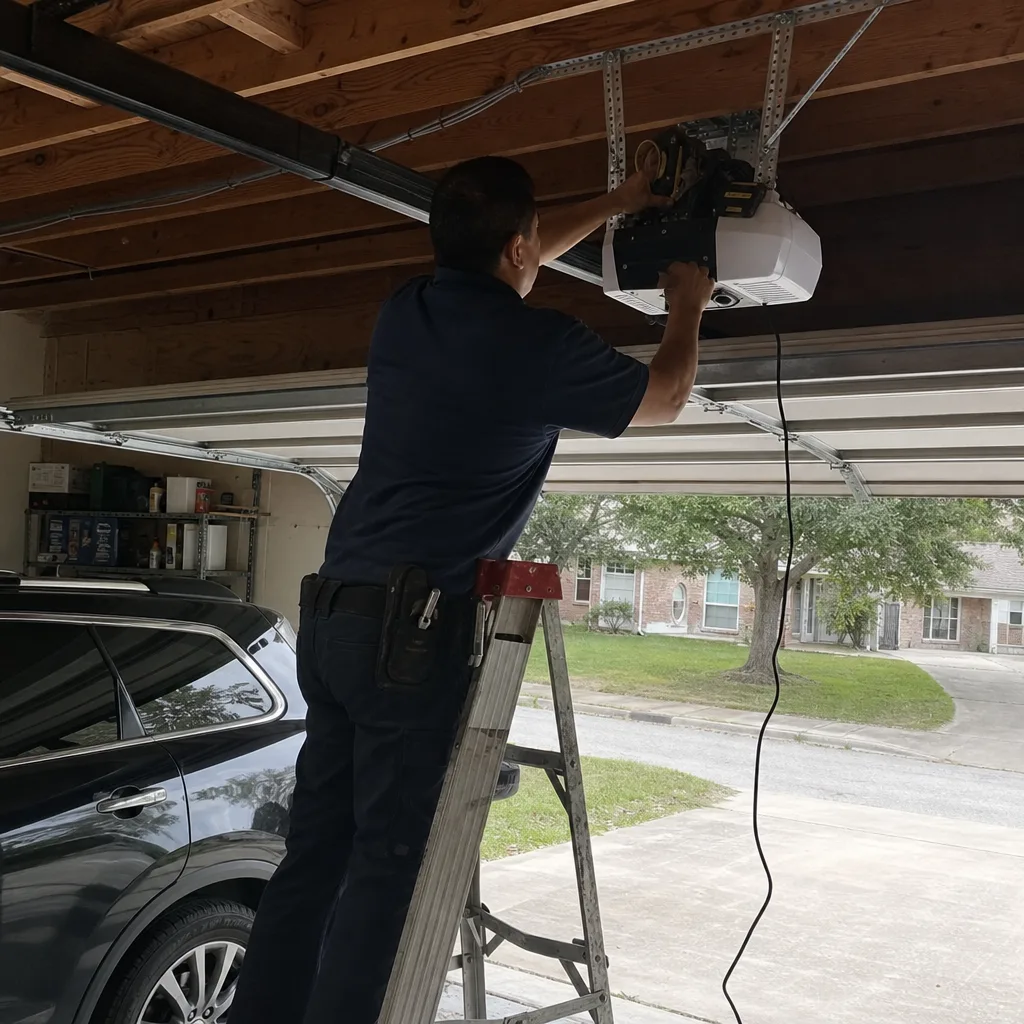
New construction in Atascocita subdivisions built after 2012 falls under the Texas Accessibility Standards (TAS), which incorporate ADA guidelines for residential common areas and certain accessible dwelling units. While single-family detached homes are exempt from full ADA compliance, the TAS applies to:
- Multi-family residential buildings with four or more units
- Townhome developments with common garage facilities
- Any dwelling designated as Type A or Type B accessible unit
- Garages in mixed-use developments with commercial space
The TAS specifies opener force and speed limits that differ from standard residential installations. A TAS-compliant opener must:
- Require no more than 5 pounds of force to stop door movement
- Reverse within 2 seconds of contact with an obstruction
- Provide a minimum 60-second warning signal before timed automatic closure
- Maintain a maximum door speed of 1 foot per second during powered operation
Most standard residential openers from major manufacturers can be adjusted to meet these parameters. The issue is verification: a TAS installation requires documentation of the force and speed settings, typically measured with a calibrated gauge during final inspection. We document these settings photographically, per The Haven Standard, so the record exists if a compliance question arises later.
In Atascocita’s newer subdivisions, particularly those developed after 2018 near the Grand Parkway corridor, we’ve encountered HOA architectural review boards that reference TAS guidelines even for single-family detached homes. The HOA cannot override building code, but they can delay certificate of occupancy if the garage door installation doesn’t match their filed plans. Checking your subdivision’s specific requirements before ordering a door prevents costly change orders.
Wind Load and Wind Code Requirements for Harris County
Harris County lies in a 130-mph design wind speed zone per the IRC and ASCE 7-16. This means every garage door installation must be rated for wind pressures corresponding to that speed, adjusted for exposure category and building height. The requirement is not optional, and it’s not satisfied by purchasing a “wind-rated” door from a big-box retailer without verifying the specific rating.
A compliant door carries a permanent label from the manufacturer stating:
- The design wind pressure in pounds per square foot (psf), typically 20-35 psf for residential applications in this zone
- The positive and negative pressure ratings
- The Miami-Dade County product approval number, or a Texas Department of Insurance (TDI) evaluation report number, or an ICC-ES evaluation report
Miami-Dade approval is the gold standard because that county’s requirements exceed even Harris County’s. A door with Miami-Dade approval NOA (Notice of Acceptance) automatically complies with Harris County requirements. Texas-specific TDI evaluation is equally valid and often faster to obtain for regional manufacturers like Clopay and Wayne Dalton.
Wind-load compliance requires more than the door slab. The complete system includes:
- Wind-load-rated tracks with reinforced vertical and horizontal supports
- Heavy-duty rollers and hinges specified for the pressure rating
- Properly anchored jambs and header connections with engineered fasteners
- Adequate structural backing in the wall framing to transfer loads
We’ve inspected installations in Atascocita where a wind-rated door was hung on standard residential track with 1-inch lag bolts into a single 2×4 jack stud. The door was labeled correctly. The installation was not. In a 130-mph wind event, the door would have failed at the track attachment, rendering the wind rating meaningless.
Harris County inspectors verify wind-load compliance during the building permit inspection process. For unpermitted work, the only verification is a post-installation inspection by a qualified garage door technician. We provide these inspections in Atascocita, documented with photographs of the label, the track attachment, and the structural backing, so the homeowner has evidence of compliance.
What Happens at Resale: Unpermitted Work and Buyer Inspections
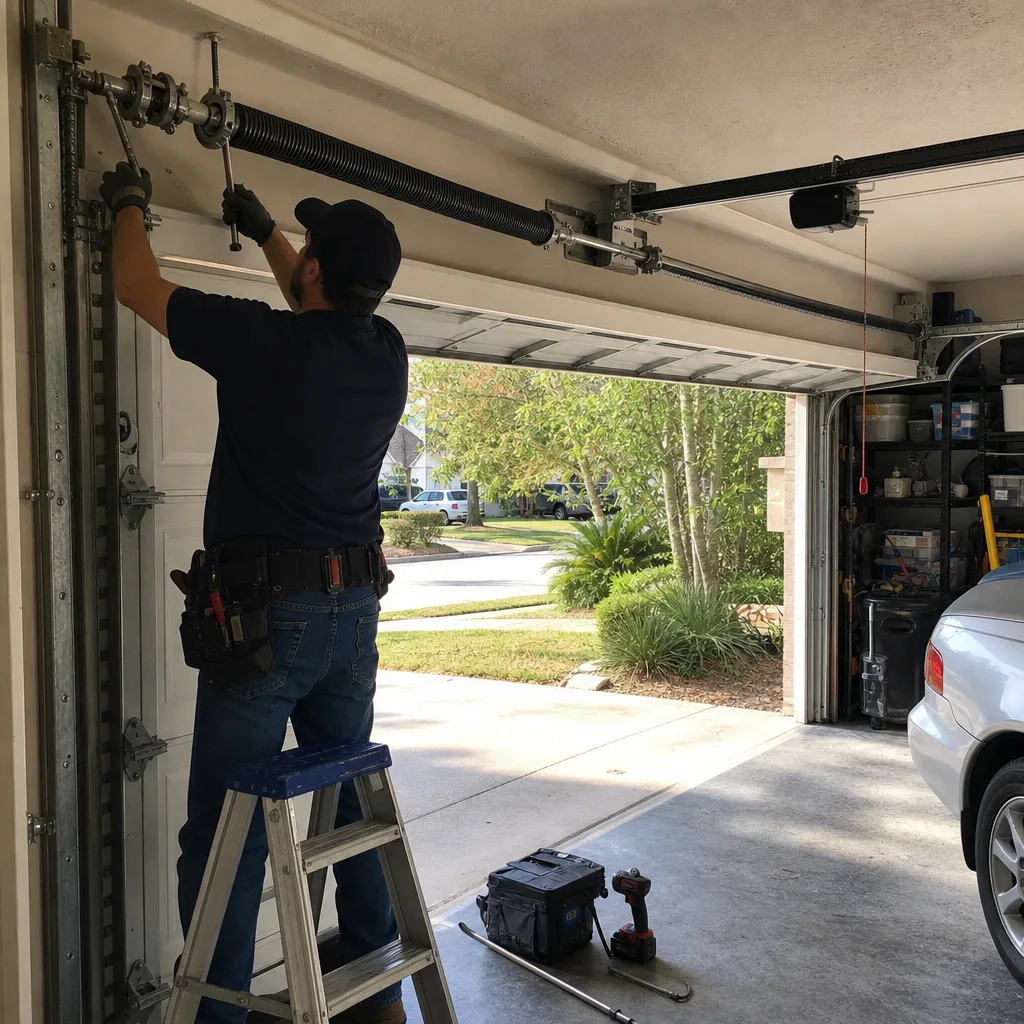
Unpermitted garage door modifications surface during resale in predictable ways. The buyer’s home inspector, working from Texas Real Estate Commission standards, examines garage door operation, safety features, and structural attachment. They do not verify permits directly, but they document conditions that suggest unpermitted work:
- A header that doesn’t match original construction plans
- Electrical work without visible inspection stickers on the panel
- A garage-to-house door without a fire rating label
- Wind-load label missing from the door or track system
When these conditions appear, the buyer’s agent typically requests a permit history from the county. If no permit exists, the seller faces one of three outcomes:
- Retroactive permitting: The seller applies for a permit after the fact, which requires opening walls, exposing electrical work for inspection, and potentially failing if the original work doesn’t meet current code. Cost: $1,500-$4,000 plus delay.
- Buyer credit at closing: The seller offers a credit for estimated remediation. In Atascocita’s market, we’ve seen credits of $2,000-$5,000 for unpermitted structural or electrical work, based on contractor estimates.
- Price renegotiation or deal termination: In a buyer’s market or with FHA/VA financing that requires code compliance, the deal may reprice or fail entirely.
The 2022-2024 market in Atascocita saw many buyers waive inspections to compete. Those buyers are now discovering unpermitted work during refinance appraisals or insurance renewals. Insurance carriers increasingly request permit verification for claims related to garage door failure, particularly wind and water intrusion claims. An unpermitted installation can void coverage for the specific component.
Our recommendation, based on 18,000+ garage doors made right since 2015: verify permit status before listing, not after receiving an inspection report. The cost of proactive verification is zero if the permits exist, and manageable if they don’t. The cost of reactive remediation is always higher.
Who Is Responsible for Pulling the Permit?
Under Texas law, the property owner is ultimately responsible for ensuring required permits are obtained. This surprises many homeowners who assume their contractor handles everything. The contractor can pull the permit as the owner’s agent, and many do, but the legal obligation remains with the owner.
A reputable garage door company in Atascocita should:
- Identify permit requirements during the initial scope discussion
- Include permit costs in the written estimate, with the specific permit type and estimated fee
- Pull the permit as part of the project, or provide written instructions if the owner prefers to handle it
- Schedule inspections and ensure the work passes before final payment
- Provide the owner with the final inspection approval and permit closure documentation
At Servo Garage Doors Atascocita, permit handling is included in our scope for any job triggering requirements. We quote the permit fee as a line item in our flat, written price, per Clause 1 of The Haven Standard. The customer knows the total cost before work starts, including the county’s fee. We don’t bury permit costs in “administrative fees” or omit them to present a lower price.
We’ve encountered competitors who tell homeowners that garage door permits “aren’t really required” or that “no one pulls them for simple replacements.” This is sometimes true for like-for-like replacement, but it’s dangerously incomplete when structural, electrical, or fire-door work is involved. The homeowner who relies on this advice owns the violation.
Common Mistakes to Avoid
- Assuming the contractor pulled the permit: Verify independently through the Harris County portal. A legitimate contractor provides the permit number without hesitation.
- Accepting “permit not needed” without specifics: Ask exactly why not. Like-for-like replacement on existing structure and electrical is the only common exemption. Anything else requires documentation.
- Ignoring the fire door between garage and house: In Atascocita’s 1990s-era subdivisions, we’ve found hollow-core doors, missing self-closers, and even louvered doors that violate fire separation requirements. These are cheap to fix but expensive to discover at closing.
- Buying a wind-rated door without verifying the installation: The label on the door slab means nothing if the track, fasteners, and structural backing don’t match the engineering. Demand documentation of the complete system.
- Skipping permit verification before a major renovation: If you’re adding square footage, converting a garage to living space, or building an ADU, the garage door modification is almost certainly permit-triggering. Start with the permit office, not the contractor.
- Relying on HOA approval as a substitute for building permit: Architectural review and code compliance are separate processes. HOA approval does not satisfy Harris County building code requirements.
- Assuming older work is “grandfathered”: Harris County does not grandfather unpermitted work. If the work was done without a permit when one was required, it’s a current code violation regardless of when it occurred.
When to Call a Professional
Call a qualified garage door technician when your project involves structural modification, new electrical circuits, fire-door replacement, or any work in Harris County’s wind-load zone where you cannot verify the existing installation’s compliance. A professional inspection documents current conditions, identifies permit triggers, and provides a written scope and price for compliant work.
Servo Garage Doors Atascocita offers free estimates in Atascocita and surrounding Harris County communities. Every estimate includes a documented photo record of existing conditions, a flat written price with permit costs itemized if required, and references to applicable code sections. For more guides & resources on garage door care and compliance, visit our blog. Call (346) 616-9278 to schedule. We answer live, 24 hours a day, including holidays, and you’ll receive a named technician and an on-the-way text, not a callback window.
For Garage Door Repair in Atascocita, Garage Door Installation in Atascocita, or Garage Door Opener Repair & Installation in Atascocita, we apply the same documentation standard: Clause 4 of The Haven Standard requires we photograph the failed or existing component before quoting, so you see what we see.
Frequently Asked Questions
No, if it’s a like-for-like replacement with no structural, electrical, or fire-door changes. Yes, if you’re modifying the opening size, adding a new electrical circuit, or replacing the fire-rated door between garage and living space. Call (346) 616-9278 for a free estimate - we’ll identify permit requirements during our scope review and itemize any permit costs in our written price.
Building permits for garage door structural modification typically run $150-$300. Electrical permits for new opener circuits range from $75-$150. Combined permits for projects triggering multiple requirements usually total $200-$400. These are county fees, not contractor markups. At Servo Garage Doors Atascocita, we itemize the exact permit fee in our flat, written price before any work starts.
You can pull it yourself as the property owner. Many contractors handle permitting as part of their service, but verify they actually do it rather than assuming. Ask for the permit number and verify it in the Harris County portal. If a contractor resists providing the number, that’s a signal to investigate further.
The buyer’s home inspector will likely flag conditions suggesting unpermitted work. You’ll face retroactive permitting, a buyer credit of $2,000-$5,000, or potential deal termination. In Atascocita’s competitive market, proactive permit verification before listing prevents last-minute surprises. We offer pre-listing inspections that document permit status and code compliance.
TAS applies to new construction in multi-family buildings, townhomes with common garages, and any designated accessible dwelling unit. Single-family detached homes are generally exempt unless the specific subdivision or HOA requires TAS-equivalent features. In Atascocita subdivisions built after 2012, check your HOA architectural guidelines, as some reference TAS force and speed limits even for detached homes.
Look for a permanent label on the door, typically on the interior face near the bottom or side edge. It should state the design wind pressure in psf and include a Miami-Dade NOA number, TDI evaluation report, or ICC-ES report. The track system should have matching wind-load reinforcement. If you cannot locate the label or suspect a mismatch between door and track, schedule an inspection. We document label location and content photographically for every wind-load inspection we perform.
Possibly not, for claims related to the unpermitted component. Insurance carriers increasingly investigate permit status for structural and wind-related claims. An unpermitted electrical installation that causes fire damage, or an unpermitted structural modification that fails in a storm, may result in denial for that specific loss. Maintaining permit documentation with your homeowner records protects your coverage position.
The Bottom Line
Garage door permits in Harris County are required for structural modification, new electrical circuits, and fire-door replacement, not for simple like-for-like swaps. The homeowner owns the liability for unpermitted work, regardless of what a contractor implied. Verify permit history through Harris County’s public portal before buying, selling, or approving major work. For installations in Atascocita’s 130-mph wind zone, demand documentation of the complete wind-load system, not just the door label. The cost of compliance is modest. The cost of discovering non-compliance at resale is not.
Written by Marcus Deller, Owner at Servo Garage Doors Atascocita, serving Atascocita since 2015.