
Last updated September 21, 2026
Full 25-point door and opener safety check with every visit - springs, cables, rollers, tracks, and your LiftMaster or Chamberlain opener included
You get a price before we start. It does not change when the truck arrives.
 Before
 After
After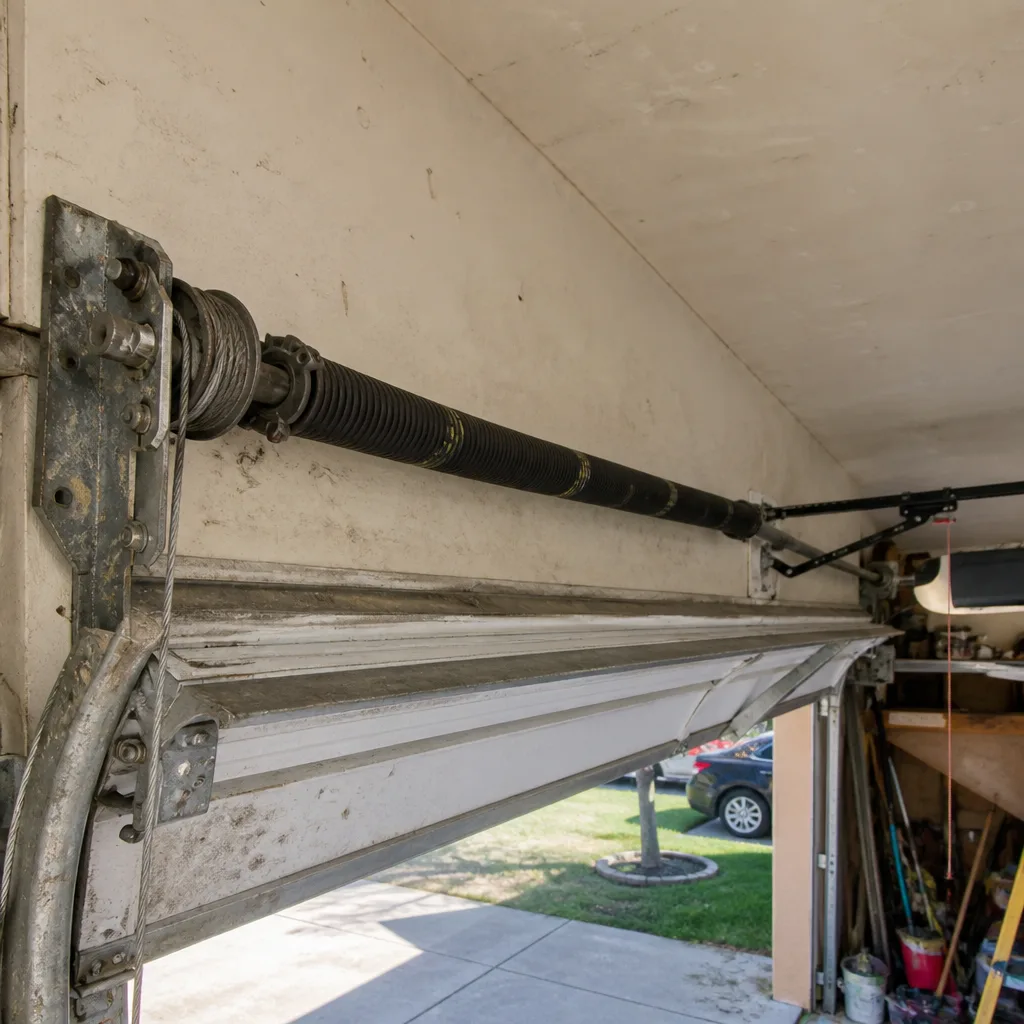 Before
 After
After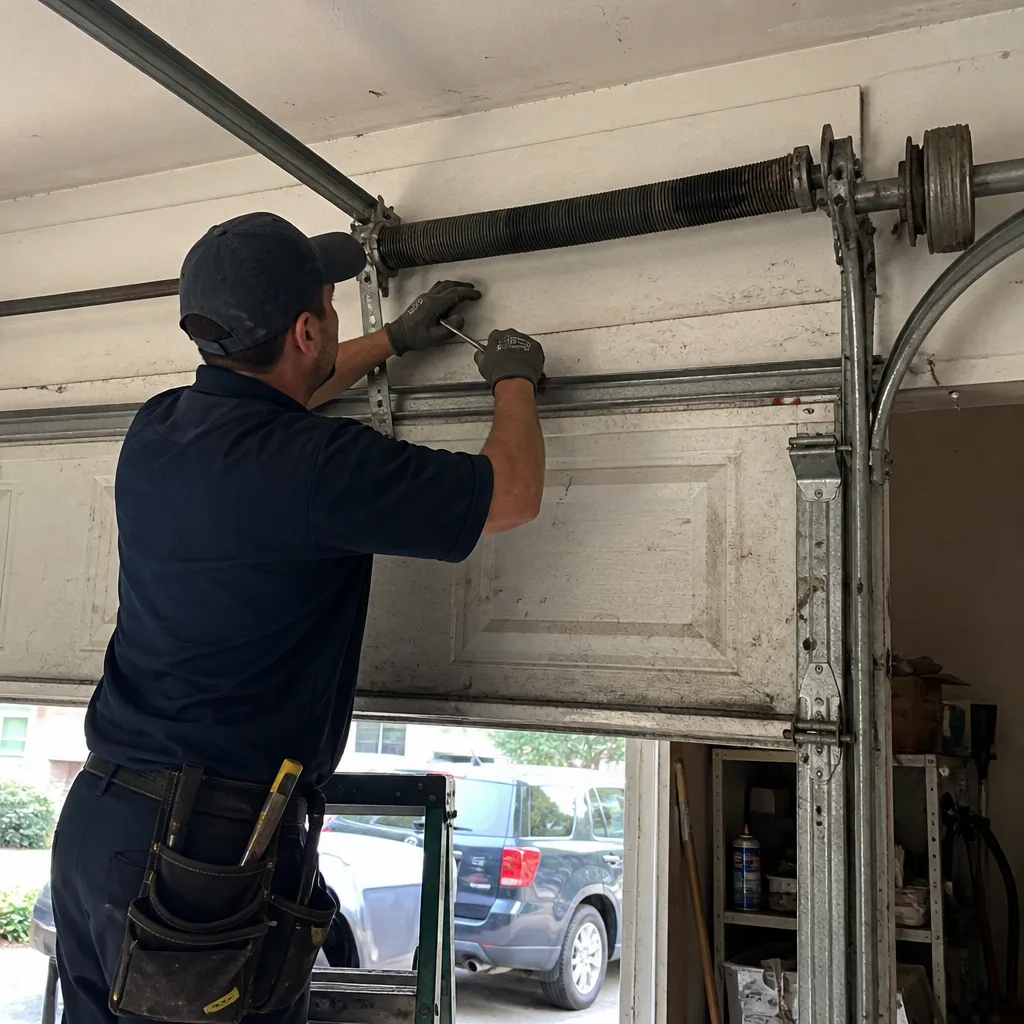 Before
 After
AfterGarage Door Repair Maintenance Checklist for Atascocita Homeowners
The most common reason Atascocita homeowners pay for an emergency service call is a failure that showed a measurable warning six to eight weeks earlier. A gap in the torsion spring coil, a frayed cable strand, or a photo-eye misalignment reading over 1/4 inch - these are all detectable, documentable conditions. The checklist most companies hand out doesn’t tell you what those things actually look like, which means it doesn’t help you decide whether to watch, act, or call. This guide gives you pass/fail criteria for every item, seasonal timing for Atascocita’s Gulf Coast climate, and a clear boundary between what you can safely check yourself and what requires a licensed technician under Texas state law. For more detail on spotting problems early, see our Garage Door Warning Signs: A Atascocita Homeowner’s Reference Guide.
Quick Answer
A proper garage door maintenance checklist for Atascocita homeowners includes monthly visual inspections of springs, cables, and hardware; quarterly lubrication and balance tests; and seasonal checks timed to April’s pre-hurricane season and October’s post-summer heat fatigue. When checks reveal issues beyond DIY scope, our Garage Door Repair services provide licensed technician support. Critical safety components - torsion springs, cable tension, and opener force settings - must be evaluated by a licensed technician, as these store lethal energy and are regulated under Texas Occupations Code Chapter 1132. The checklist below is organized by what you observe, what measurement or test confirms it, and what action to take.
Table of Contents
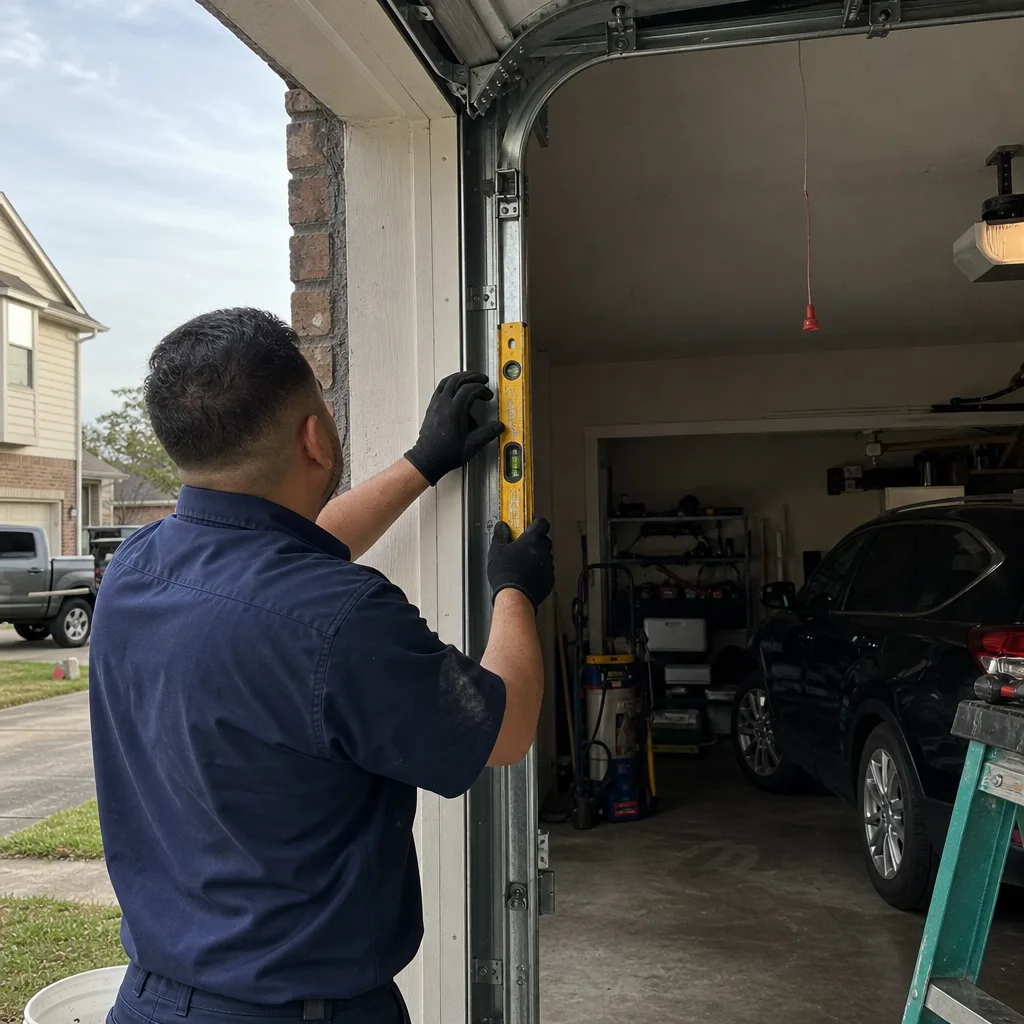
- Torsion Spring System: Pass/Fail Criteria
- Lift Cables and Hardware Inspection
- Rollers, Tracks, and Door Balance
- Bottom Weatherseal and Atascocita Humidity
- Garage Door Opener and Safety Systems
- Seasonal Timing: April and October Checks
- Owner-Safe Tasks vs. Licensed-Technician Work
- What to Photograph Before Calling
 Before
 After
AfterTorsion Spring System: Pass/Fail Criteria
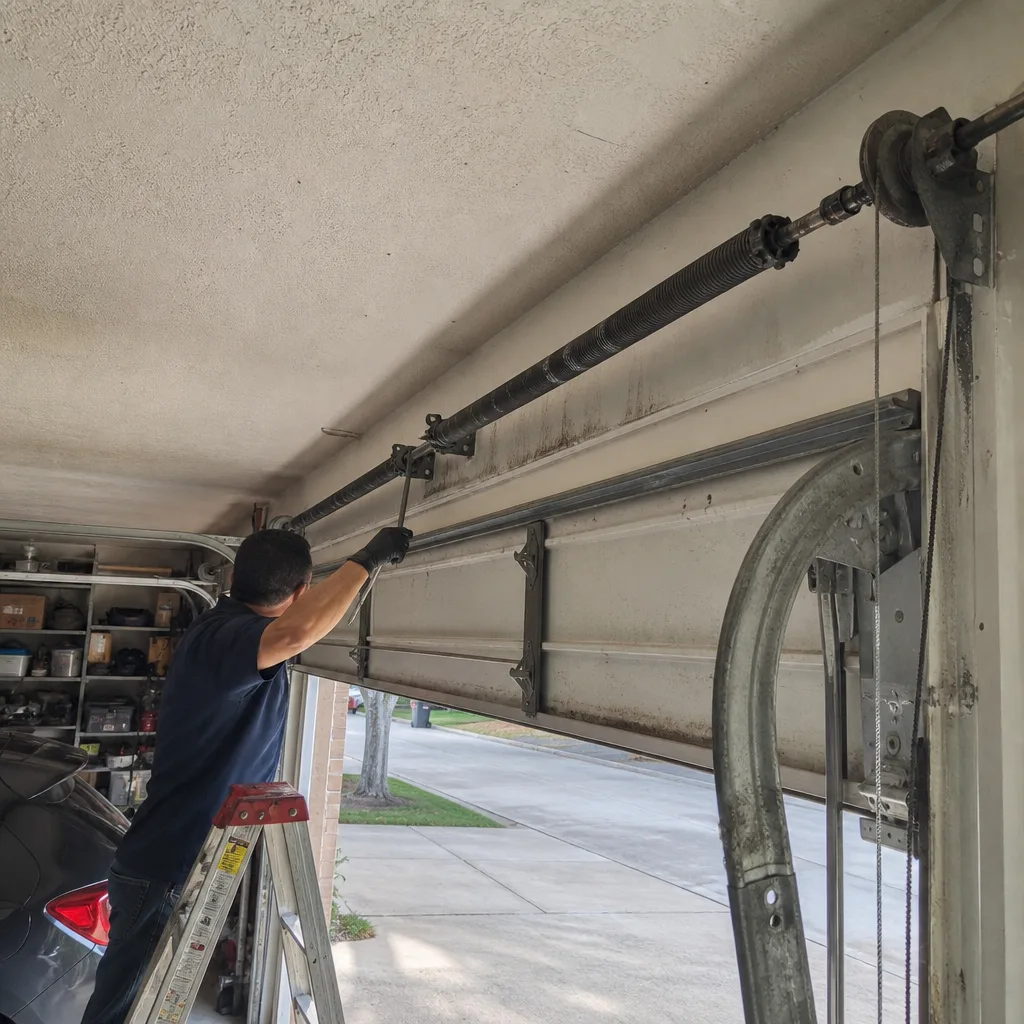
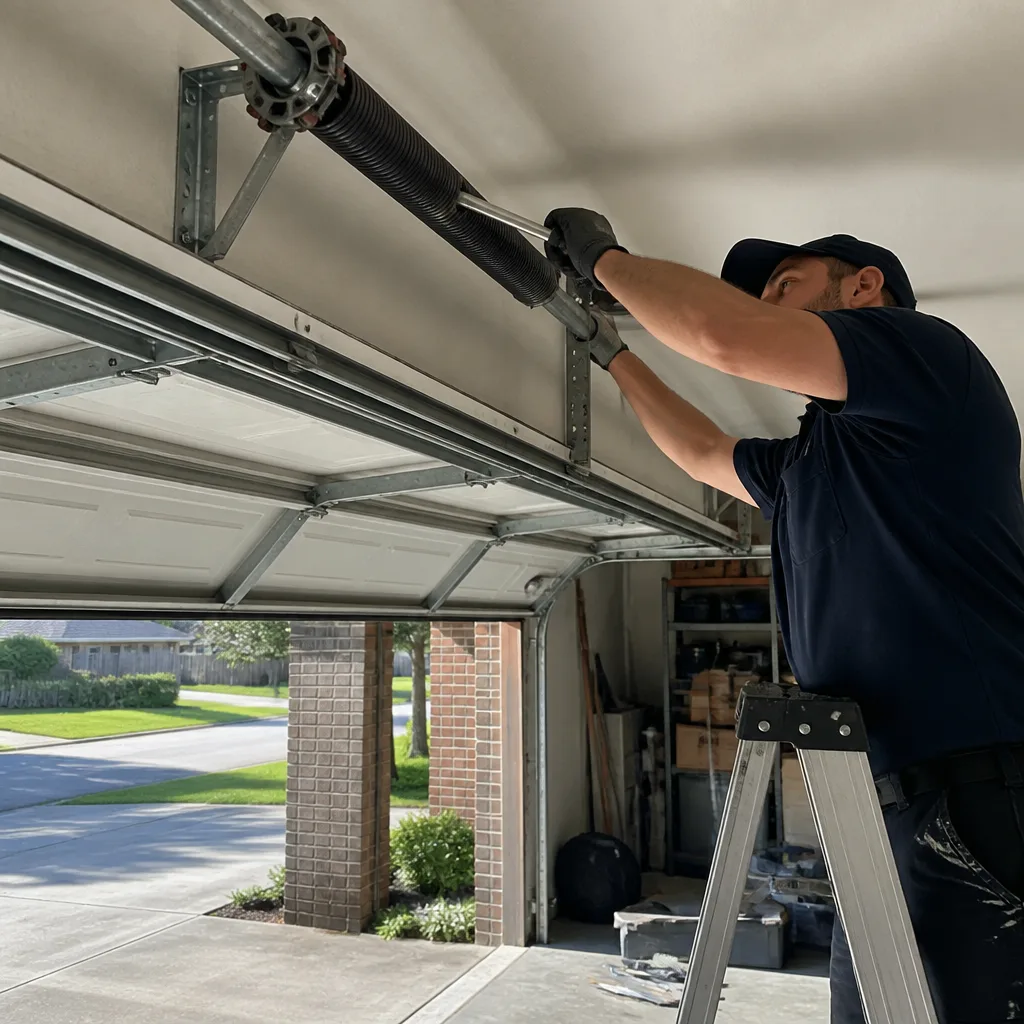
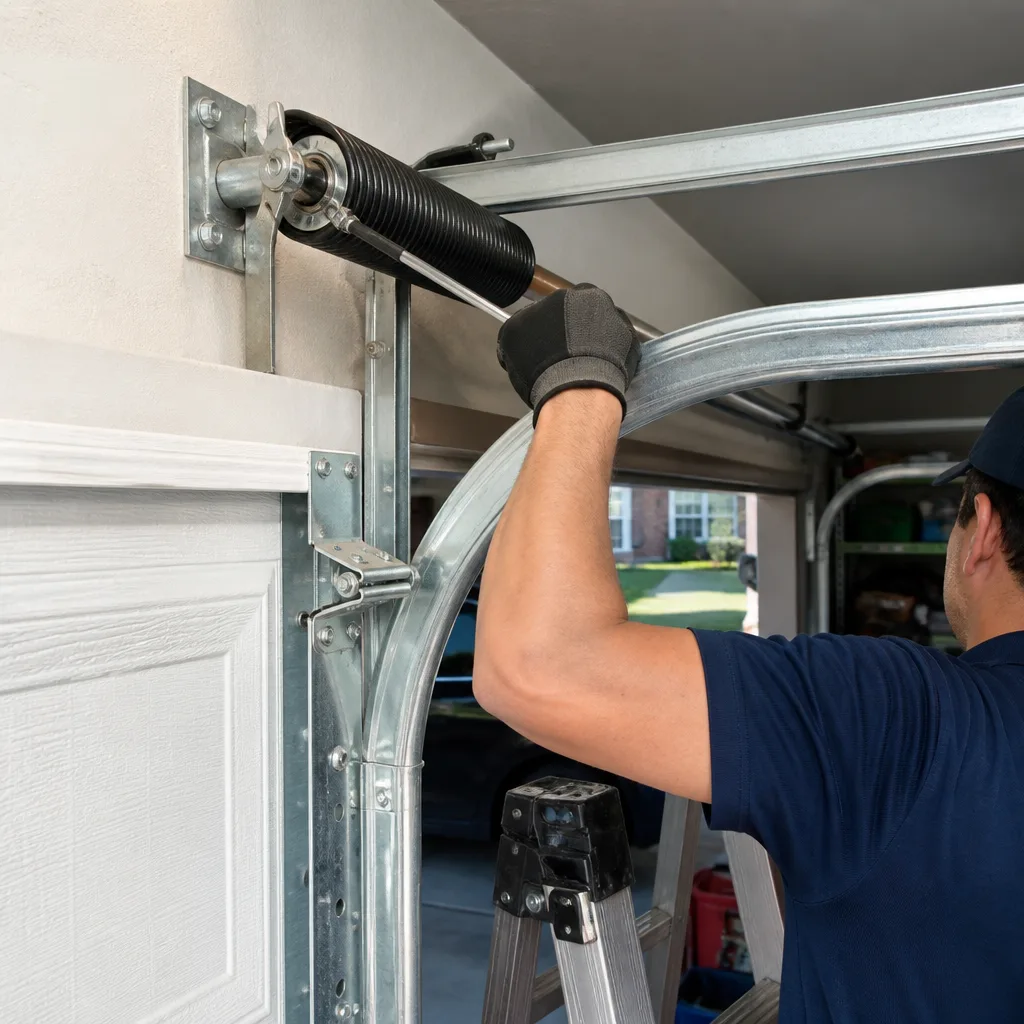
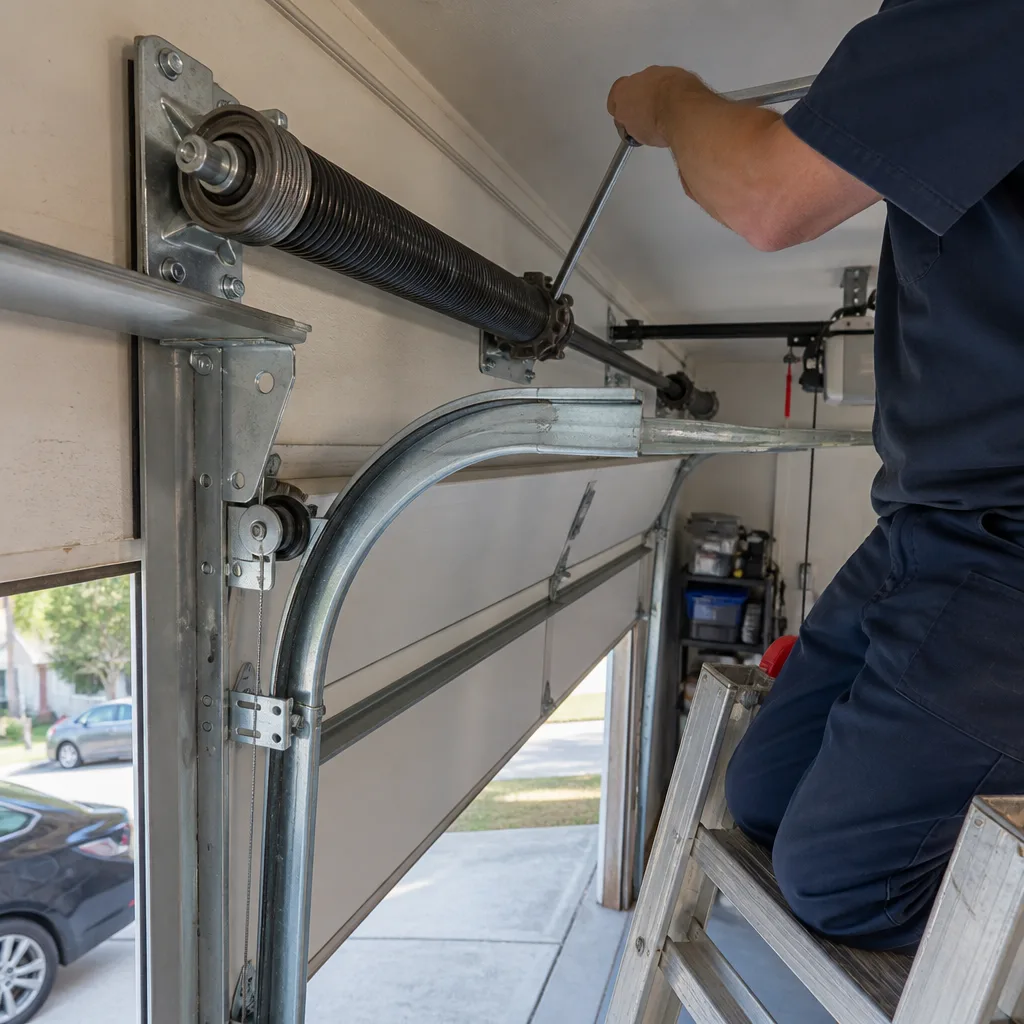
The torsion spring is the single most dangerous component on your garage door. It stores mechanical energy equivalent to lifting several hundred pounds, and a failure can release that energy without warning. In Atascocita, we see accelerated spring fatigue from March through October, when attic temperatures above the garage regularly exceed 130°F and thermal cycling stresses the steel.
Here’s what to look for, with measurements that matter:
Visual Inspection (Monthly)
- Coil gap measurement. A healthy torsion spring has coils that sit tight against each other when the door is closed. Insert a standard business card between coils. If it slides in more than 1/16 inch at any point, the spring has taken a set and lost preload. This is a pre-failure condition. In our experience across Atascocita’s Kings Harbor and Walden on Lake Houston subdivisions, springs showing this gap fail within 4-8 weeks during summer heat.
- End cone condition. The stationary cone (left side, typically) and winding cone (right side) should show no cracks, deformation, or rust bleeding. Rust streaks running down the spring indicate internal corrosion from humidity intrusion.
- Spring wire diameter. If you can safely access it, measure the wire with calipers. Standard residential springs run 0.207 to 0.273 inch. A reduction of more than 0.005 inch from specification indicates wear. Do not attempt to measure a spring under tension.
The Balance Test (Quarterly)
Disconnect the opener by pulling the red emergency release cord. Manually lift the door to waist height and release. A properly balanced door stays in place or drifts slowly. If it falls closed, the spring is under-tensioned; if it rises, it’s over-tensioned. Either condition strains the opener and risks sudden failure.
Pass/fail: Door holds position within 6 inches for 10 seconds. Fail means call a technician - spring adjustment requires winding bars and training, and deaths occur annually from DIY attempts.
Safety note: Torsion springs are under lethal tension. Never insert tools into the cone, never unwind without proper bars, and never stand in the plane of the spring. Texas Occupations Code Chapter 1132 requires a contractor license for spring work. The Garage Door Repair in Atascocita page explains what documentation to request from any technician.
Lift Cables and Hardware Inspection
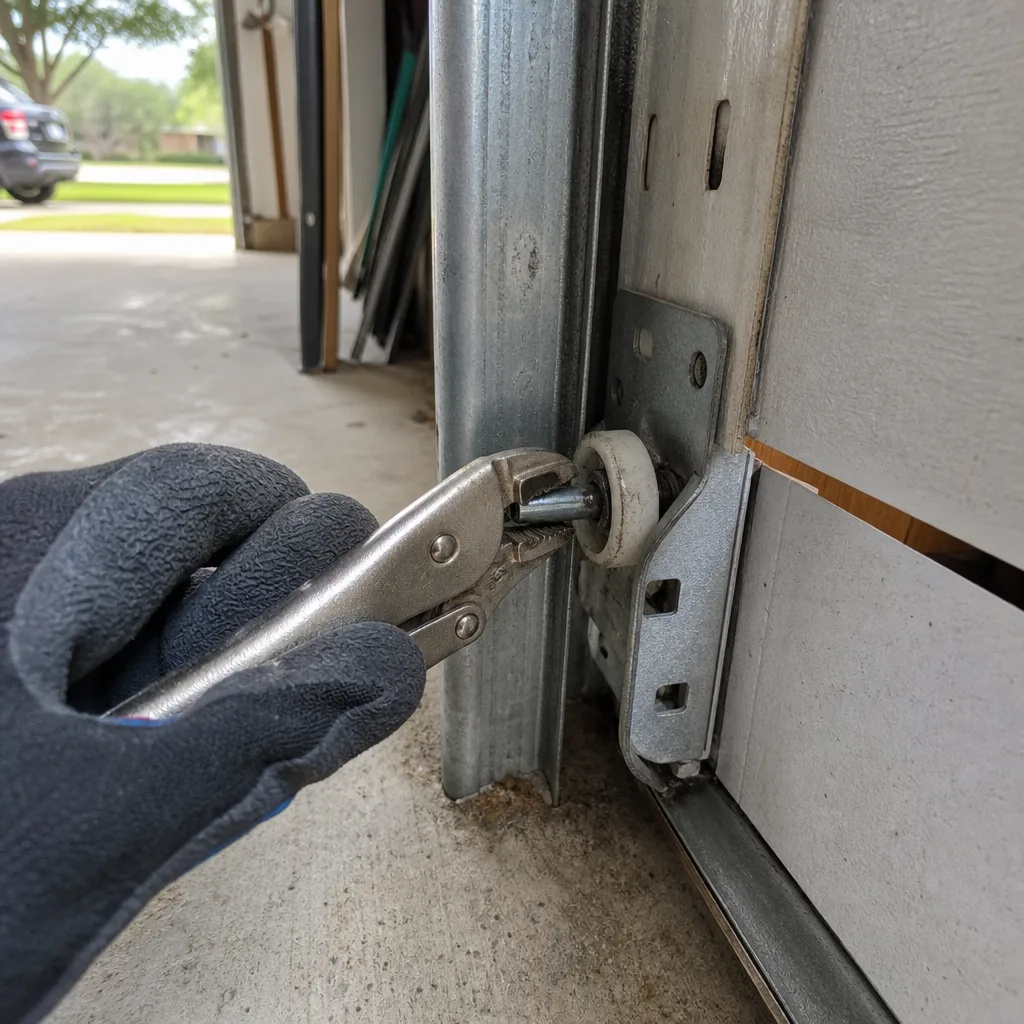
Lift cables transfer spring force to the bottom corners of the door. When they fail, the door drops unevenly and can jam or fall. Atascocita’s humidity, particularly in lake-adjacent neighborhoods like Eagle Springs and Atascocita Shores, accelerates cable corrosion at the bottom loop where road salt and moisture collect.
Cable Pass/Fail Criteria
- Individual strand count. A 1/8-inch cable contains 19 strands around a core. If you can count more than 3 broken strands in a 6-inch section, the cable fails. Replace both sides; they age as a pair.
- Bottom loop condition. The loop that hooks to the bottom bracket should show no flattening, kinking, or rust powder. Tap it gently - a dull thud instead of a clean ring suggests internal corrosion.
- Drum alignment. The cable should wind evenly on the drum, not overlap or bunch at one end. Misalignment indicates a leveling problem or bent drum.
Hardware Torque Check
With the door closed, inspect all roller brackets, hinges, and track supports. Look for:
- Zinc plating worn to bare steel (white rust turning to red rust)
- Bolt heads that have rotated from their original position
- Hinge barrels that wobble when you grip and shake the door
Do not tighten hardware yourself. Bolts on a moving door are torque-critical and require a calibrated wrench. Over-tightening cracks hinges; under-tightening lets them elongate. This is technician work.
Rollers, Tracks, and Door Balance
Rollers are the most replaced wear item, yet the easiest to diagnose. The distinction between nylon and steel matters for your checklist.
Roller Inspection by Type
| Type | Pass Criterion | Fail Criterion | Lifespan in Atascocita |
|---|---|---|---|
| Nylon (sealed bearing) | Spins freely, no wobble, no flat spots on wheel | Flat spot, cracked wheel, or bearing grittiness | 8-12 years |
| Steel (unsealed) | Spins freely, no rust on stem, no flat spots | Flat spot, rust bleeding from bearing, or stem corrosion | 5-8 years (humidity accelerates) |
| Steel (sealed bearing) | Same as nylon | Same as nylon | 10-15 years |
The flat spot test: With the door closed, mark a roller with tape at the top. Open and close the door once. If the tape returns to within 1/4 turn of top, the roller is rolling. If it’s random, the roller is sliding on a flat spot and grinding the track.
Track Alignment
Vertical tracks must be plumb within 1/4 inch over their full height. Horizontal tracks must slope down toward the back of the garage by 1/4 inch per foot. Check with a 4-foot level. Misalignment causes binding, opener strain, and eventual derailment.
In Atascocita, we see track settlement issues in homes built 2015-2020 on the area’s expansive clay soils, particularly in newer developments west of FM 1960. The slab shifts seasonally, and tracks bolted to wood jambs move with it. A track that’s been adjusted once often needs re-checking after the next dry summer.
Bottom Weatherseal and Atascocita Humidity
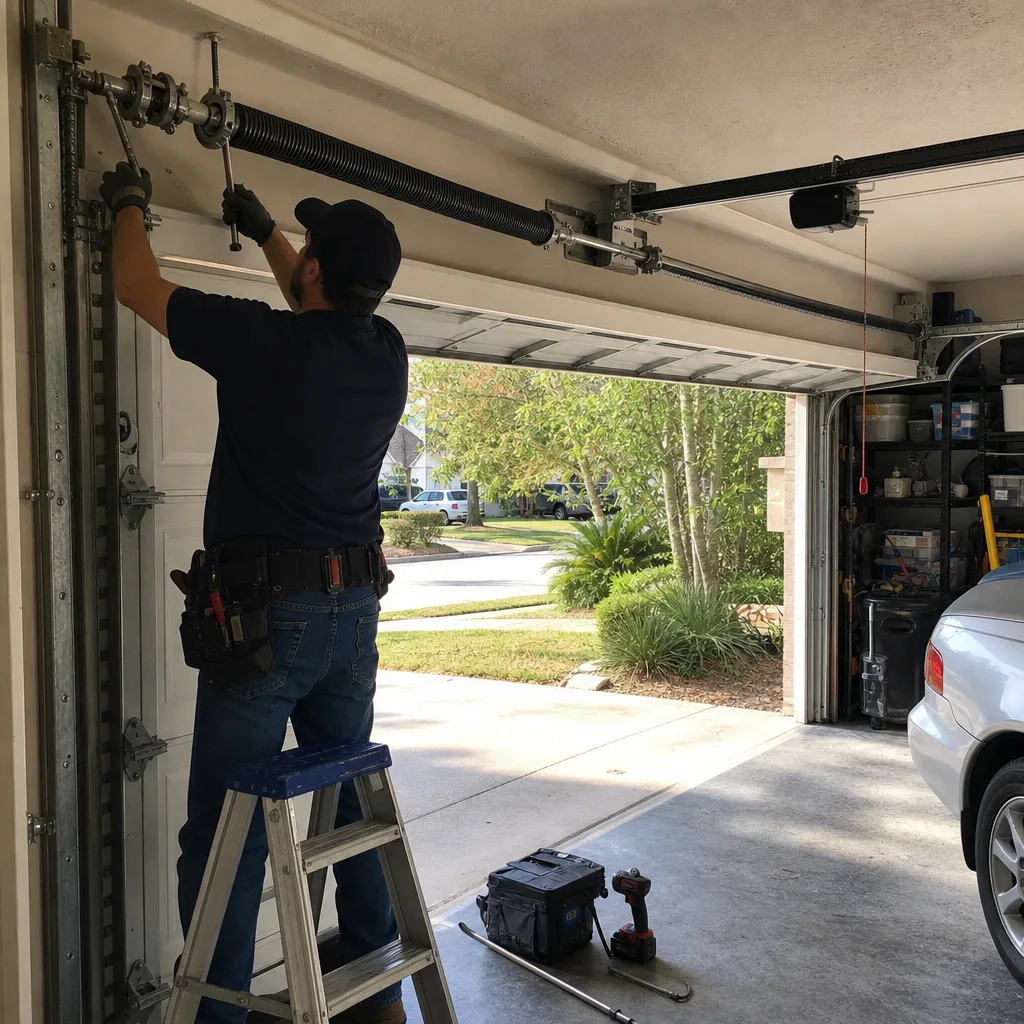
The bottom weatherseal is your door’s only defense against water, pests, and the conditioned air loss that drives up summer electric bills. In Atascocita, where annual rainfall exceeds 50 inches and humidity stays above 70% for six months, this component fails faster than in drier climates.
The Compression Test
Close the door on a strip of standard copy paper placed at the center bottom. A healthy seal grips the paper so you cannot pull it free without tearing. If it slides out with moderate resistance, compression is marginal. If it pulls free easily, the seal has flattened or the door has settled.
Test at three points: center, left corner, right corner. Atascocita’s concrete slabs often settle unevenly, particularly in patio-home communities where the driveway apron was poured separately. A seal that passes center but fails at a corner indicates slab settlement, not seal wear.
Material Condition
- Rubber (EPDM): Should be pliable, not cracked, with no permanent compression set (a flattened ridge where it contacts the floor). Lifespan: 3-5 years in Gulf Coast humidity.
- Vinyl (PVC): More rigid, better for pest exclusion. Check for UV embrittlement - it will snap rather than bend when flexed. Lifespan: 4-6 years.
- Brush or fin seal: Bristles should stand upright, not mat sideways. Common on Clopay and Amarr wind-load doors. Lifespan: 2-4 years.
Pest and Water Entry Risk Threshold
A gap visible to daylight under any portion of the closed door is an immediate fail - that’s entry space for rodents and water during Atascocita’s flash-flood events. A compression test that passes but barely (paper pulls with slight resistance) is a watch condition; schedule replacement before hurricane season.
For Garage Door Installation in Atascocita with upgraded weatherseal options, including wind-load rated assemblies for Harris County’s coastal zone, see our installation page.
Garage Door Opener and Safety Systems
The opener is not the muscle; it’s the brain and the safety monitor. A properly maintained opener should detect an obstruction and reverse within 2 seconds. Testing this isn’t optional - federal law (UL 325) requires it, and a failed safety system makes you liable if injury occurs.
Monthly Safety Reversal Test
- Place a 2×4 board flat on the floor centered under the door.
- Close the door using the wall button (not remote - the remote bypasses some safety features during programming).
- The door must reverse within 2 seconds of contact and return fully open.
- If it stops but does not reverse, or if it continues downward, the opener fails. Do not use the door until repaired.
Photo-Eye Alignment Test
The photo eyes (sender and receiver, typically 4-6 inches above floor on each side) must show steady indicator lights - usually solid amber and green. Measure the beam height: both eyes must be within 1/4 inch of each other vertically. A misalignment over 1/4 inch causes intermittent failure, particularly when thermal expansion shifts the brackets in Atascocita’s summer heat.
Clean the lenses monthly with a dry cloth. Humidity film builds faster here than inland. Test function by passing a broom handle through the beam during closing - the door must reverse immediately.
Force Setting Verification
Opener force settings are not user-adjustable beyond a rough sensitivity dial. The actual force measurement requires a calibrated gauge. If your door reverses on the 2×4 test but struggles with normal operation (slowing, hesitating), the force may be set too high to mask a mechanical problem. This is dangerous - the opener will crush an obstruction rather than reverse. Have a technician measure and document the actual force; Clause 4 of The Haven Standard requires we photograph the gauge reading.
For opener-specific service, see Garage Door Opener Repair & Installation in Atascocita.
Seasonal Timing: April and October Checks
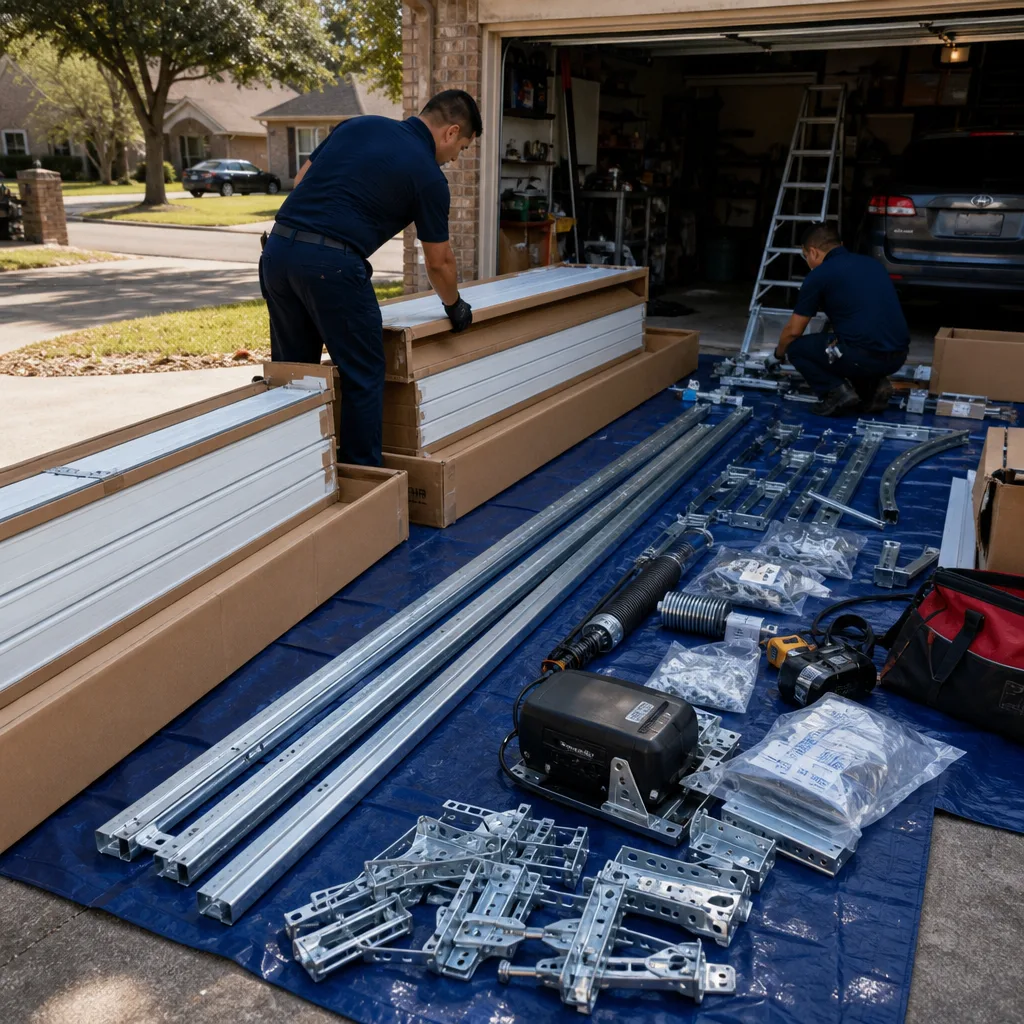
Atascocita’s climate creates two critical maintenance windows. Missing either one increases failure risk measurably.
April: Pre-Hurricane Preparation
Before June 1, complete these checks:
- Wind-load hardware. If your door is wind-rated (required in Harris County for new construction since 2006), verify the vertical reinforcement struts are bolted tight, not zip-tied or missing. Check the Wayne Dalton or Clopay wind-lock engagement - the tabs should move freely and lock into track slots when closed.
- Bottom seal and threshold. Replace if the compression test is marginal. Storm surge and street flooding in Atascocita’s lower elevations (near Lake Houston, in Timber Forest and Pinehurst of Atascocita) enter through the garage first.
- Backup power test. If you have a battery backup opener (required in Texas for new installations), disconnect AC power and verify one full cycle on battery. Batteries degrade in heat; April tests catch summer failure.
- Photo-eye height. Spring growth raises ground level. Verify eyes are still 4-6 inches above any new mulch or soil buildup.
October: Post-Summer Heat Fatigue
After 120+ days above 90°F, components need assessment:
- Torsion spring thermal set. The gap test described earlier. Summer thermal cycling causes the most spring failures we see in October and November.
- Opener thermal stress. Check the logic board for error codes (flashing LED patterns on most LiftMaster and Chamberlain units). Heat degrades capacitors; intermittent operation in fall often traces to summer damage.
- Lubrication state. High heat evaporates light oils. The track and spring should show clean lubricant film, not dry metal or black sludge (over-lubrication that collected dust).
- Panel seal integrity. Thermal expansion loosens inter-panel seals on sectional doors. Light visible between panels indicates seal failure and potential water intrusion path.
Owner-Safe Tasks vs. Licensed-Technician Work
The boundary is not about skill; it’s about stored energy and legal liability. Here’s the clear division:
Owner-Safe: Visual Inspection and Basic Testing
- Monthly visual checks of springs, cables, rollers, and hardware (look, do not touch)
- Balance test by manual lift after disconnecting opener
- Photo-eye cleaning and alignment verification
- Safety reversal test with 2×4
- Weatherseal compression test with paper strip
- Lubrication of hinges, rollers, and track with silicone-based spray (never grease on tracks - it collects grit)
Licensed Technician Required: Stored Energy and Calibrated Work
- Torsion spring adjustment or replacement. Lethal stored energy. Texas requires a contractor license. Your homeowner’s insurance may deny a claim for injury or damage from unlicensed work.
- Cable replacement. Requires releasing spring tension safely, then restoring proper drum winding and door balance.
- Track realignment or replacement. Involves door removal, spring handling, and precise leveling.
- Opener force setting calibration. Requires a force gauge and knowledge of UL 325 compliance thresholds.
- Wind-load hardware modification. Altering rated assemblies voids the engineering certification and may violate building code.
When we dispatch a technician in Atascocita, they arrive with a calibrated torque wrench, force gauge, and the photo documentation system required by Clause 4. The customer receives the images and measurements, not a verbal summary.
What to Photograph Before Calling
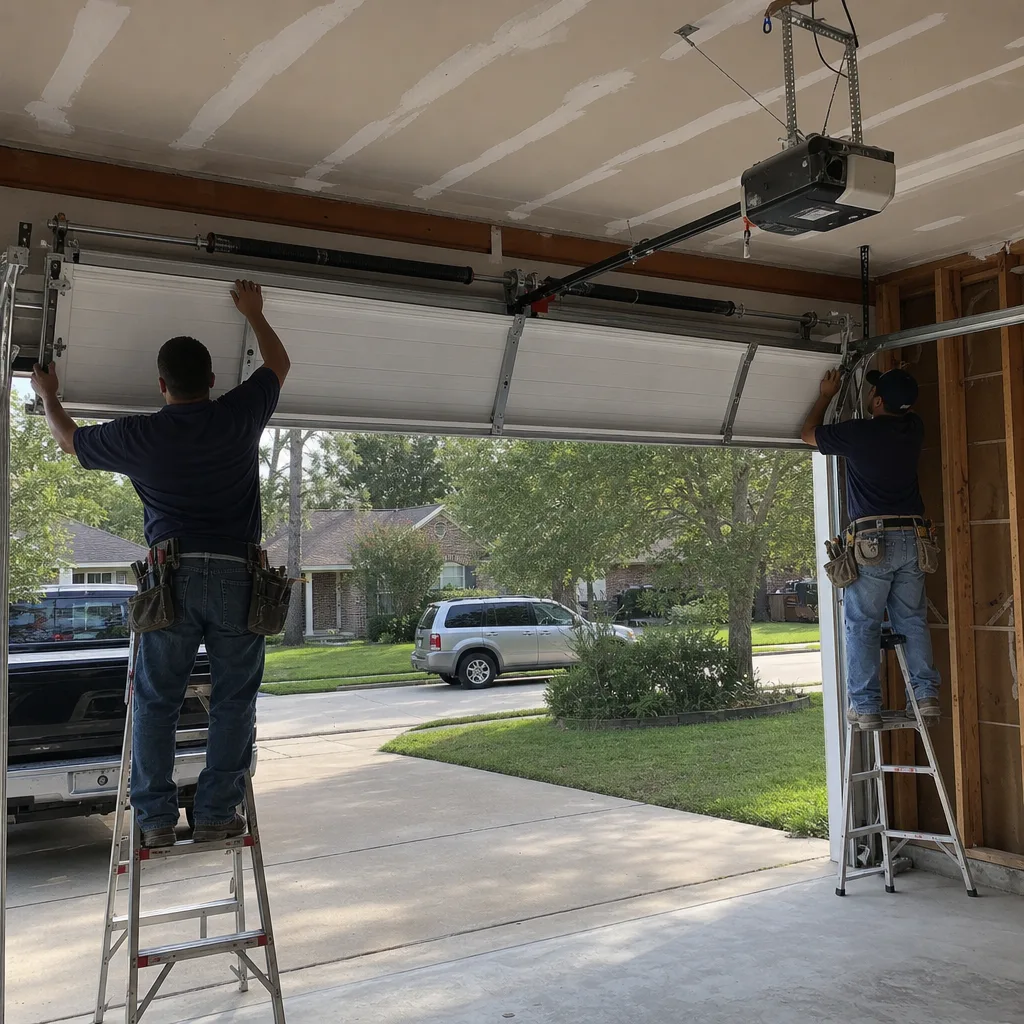
Remote diagnosis saves a trip and ensures the right parts on the first visit. Here’s what to capture:
For Spring Issues
- Wide shot of the full spring assembly, both ends visible
- Close-up of the coil gap area, with a ruler or coin for scale
- End cone from below, showing any cracks or rust streaks
- Label or stamp on the spring (wire size, length, wind direction) if readable
For Cable Issues
- Full cable run from drum to bottom bracket
- Close-up of bottom loop and any fraying
- Drum showing cable winding pattern
For Opener Issues
- Opener model label (usually on the motor housing)
- Wall control panel showing any error indicators
- Safety sensor lights (color and state)
Text these to Servo Garage Doors Atascocita home or mention them when you call. We can often confirm the part and price range before arrival, which is how Clause 1 works - written price, then work.
Common Mistakes to Avoid
- Using WD-40 on springs or tracks. It’s a solvent, not a lubricant. It strips existing grease and attracts dust. Use silicone-based garage door lubricant only.
- Ignoring a single broken spring on a two-spring door. The remaining spring is now overloaded and fatigued. Replacing one guarantees the other fails soon, usually at the worst time. We replace torsion springs as matched pairs.
- Testing the safety reversal with your hand or foot. Use the 2×4 as specified. If the system fails, you need distance, not a hospital visit.
- Assuming a slow door means the opener is weak. Nine times out of ten, the door is binding or unbalanced and the opener is compensating. Replacing the opener masks the real problem until the mechanism fails catastrophically.
- Skipping the October check because “it just got serviced in spring.” Atascocita’s summer heat is the primary stressor. The spring check in April catches pre-existing wear; the October check catches heat-induced degradation.
- DIY weatherseal replacement on wind-rated doors. The seal is part of the engineered assembly. An aftermarket seal that doesn’t compress correctly can prevent the wind locks from engaging.
- Calling for “a tune-up” without specifying what you observed. Vague requests lead to variable pricing. Note the symptom, the measurement if you took one, and the door brand (Clopay, Amarr, Wayne Dalton, Craftsman, or other).
When to Call a Professional
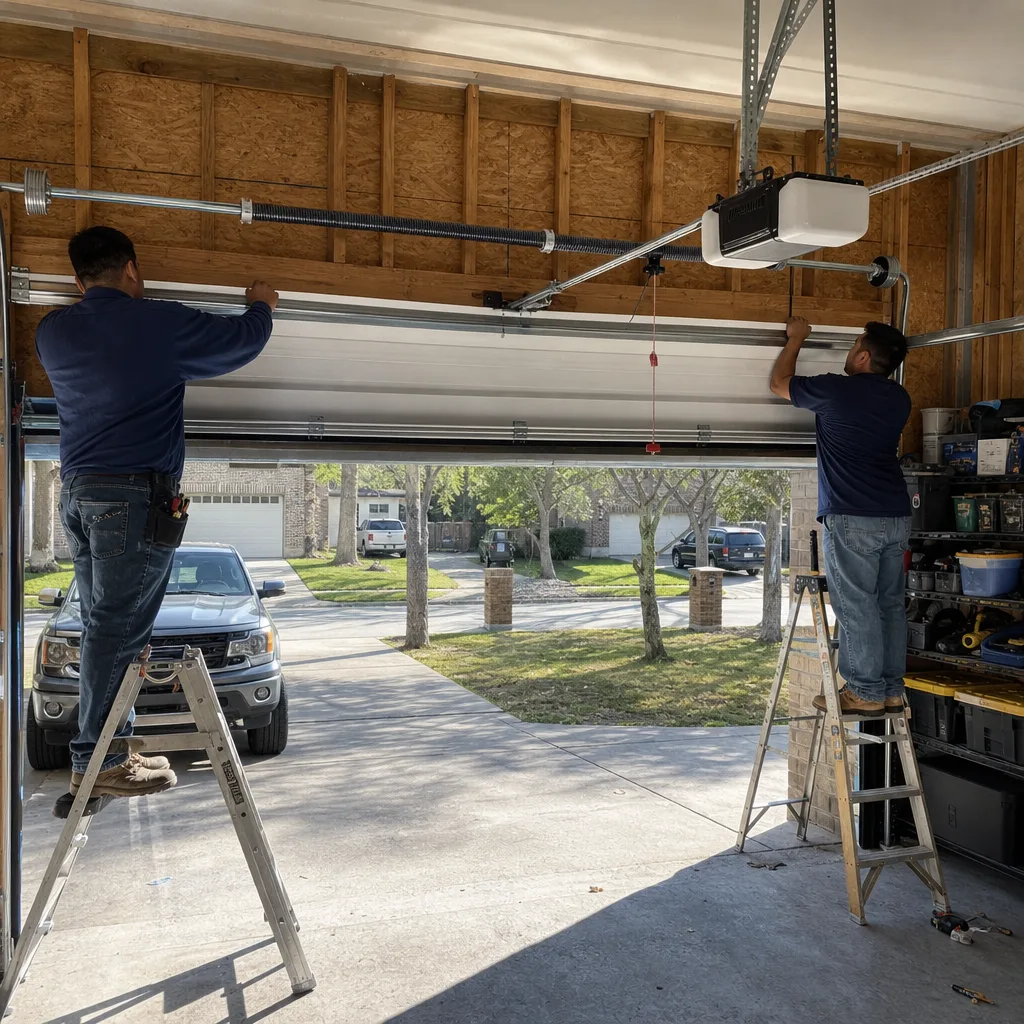
Call a licensed technician when any check shows a fail condition, when you hear grinding or popping during operation, or when the door moves unevenly or stops mid-travel. For guidance on vetting contractors, read How to Hire a Garage Door Contractor in Atascocita: A Step-by-Step Guide. Same-day response matters for security and weather protection, but not at the cost of documentation - demand a written scope and price before work begins.
Servo Garage Doors Atascocita offers free estimates in Atascocita. Every visit includes the documented photo record required by Clause 4 of The Haven Standard, and every quote is flat, written, and agreed before any work starts per Clause 1. Call (346) 616-9278 to schedule or text your photos for remote pre-diagnosis.
Frequently Asked Questions
Monthly visual inspections, quarterly balance and safety tests, and comprehensive seasonal checks in April and October. The Gulf Coast climate accelerates wear on springs, cables, and weatherseal compared to drier regions, so the standard “twice a year” advice is insufficient here.
A professional inspection and tune-up typically ranges from $89 to $149, depending on door size and whether spring tension adjustment is needed. Servo Garage Doors Atascocita provides a flat, written price before any work begins - no exceptions. Call (346) 616-9278 for an exact quote; estimates are free.
No. Torsion springs store lethal energy and are regulated under Texas Occupations Code Chapter 1132. Annual deaths and amputations occur from DIY spring work. The adjustment requires winding bars, training, and a calibrated understanding of door weight. This is licensed-technician work only.
Thermal expansion of steel components, evaporated lubricant, and opener thermal protection circuits all contribute. In Atascocita’s July-August heat, we see 40% more opener strain calls than in cooler months. The October maintenance check is specifically designed to catch summer-degraded components before winter use increases.
At Servo Garage Doors Atascocita, no. Clause 1 of The Haven Standard requires a flat, written price and written scope before any work starts. If you provide clear photos and description, we quote the full price remotely. If we arrive and find additional issues, we document them, quote separately, and require your approval before any additional work. The price agreed is the price paid.
Yes. Our technicians stock springs, cables, rollers, and opener components for LiftMaster, Chamberlain, Genie, Clopay, Amarr, Wayne Dalton, Craftsman, and Raynor. For less common assemblies, we identify the part from your photos and schedule installation once it arrives - no diagnostic trip charge for the return visit if we quoted the job.
A documented photo record of all findings, the completed work, and any recommendations for future attention; the written scope and flat price you approved; and the 365-Day Done Right Promise terms. This traces to our founding rule from 2015: the customer sees the failed part before anyone quotes a replacement, and sees what was done after the work is complete.
The Bottom Line
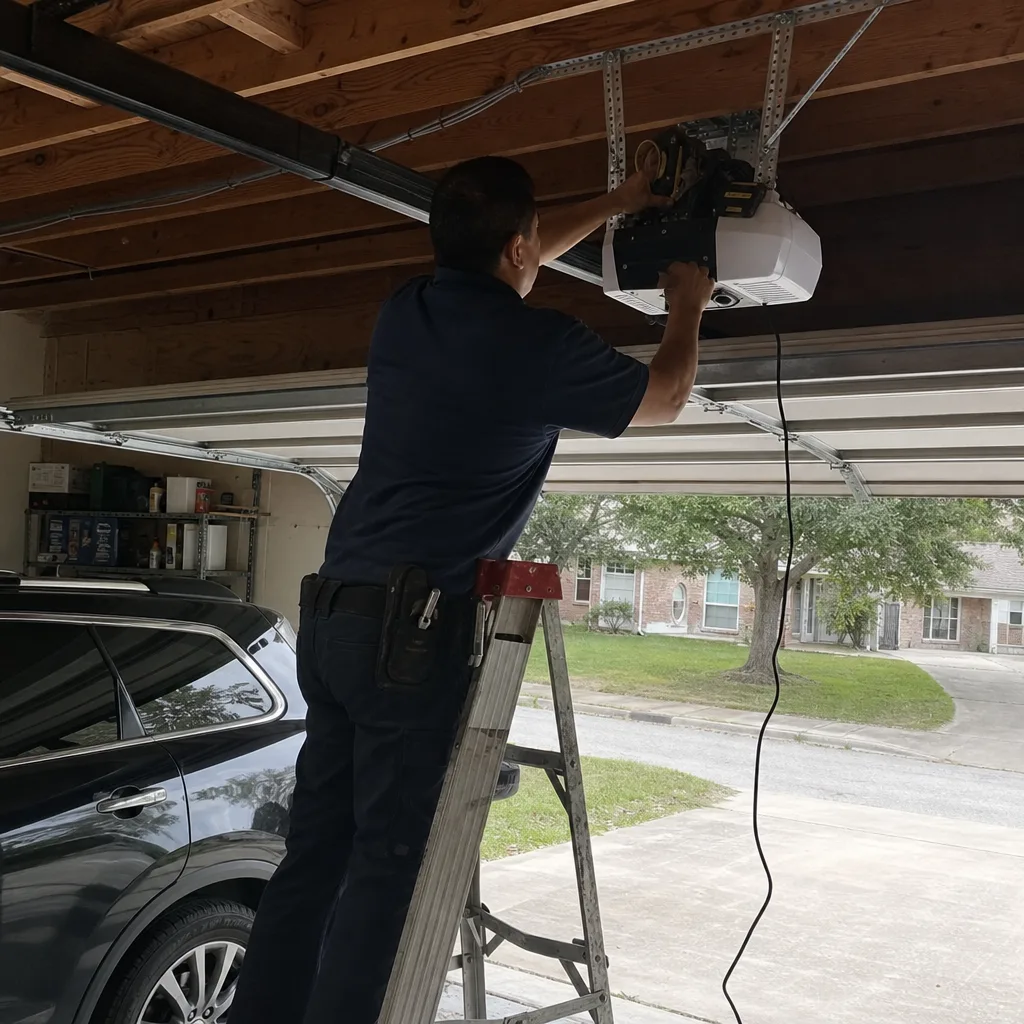
A maintenance checklist only protects you if it tells you what failure looks like, not just what to inspect. Explore more guides & resources for deeper coverage of garage door care. Use the pass/fail criteria above, time your checks to Atascocita’s climate realities, and respect the boundary between owner-safe observation and licensed-technician work. Document what you find - photos with scale references - and demand the same documentation from any professional you hire. The goal isn’t a perfect door; it’s a door that fails predictably and safely, with warning, rather than suddenly and expensively.
Written by Marcus Deller, Owner at Servo Garage Doors Atascocita, serving Atascocita since 2015.