
Last updated September 21, 2026
Full 25-point door and opener safety check with every visit - springs, cables, rollers, tracks, and your LiftMaster or Chamberlain opener included
You get a price before we start. It does not change when the truck arrives.
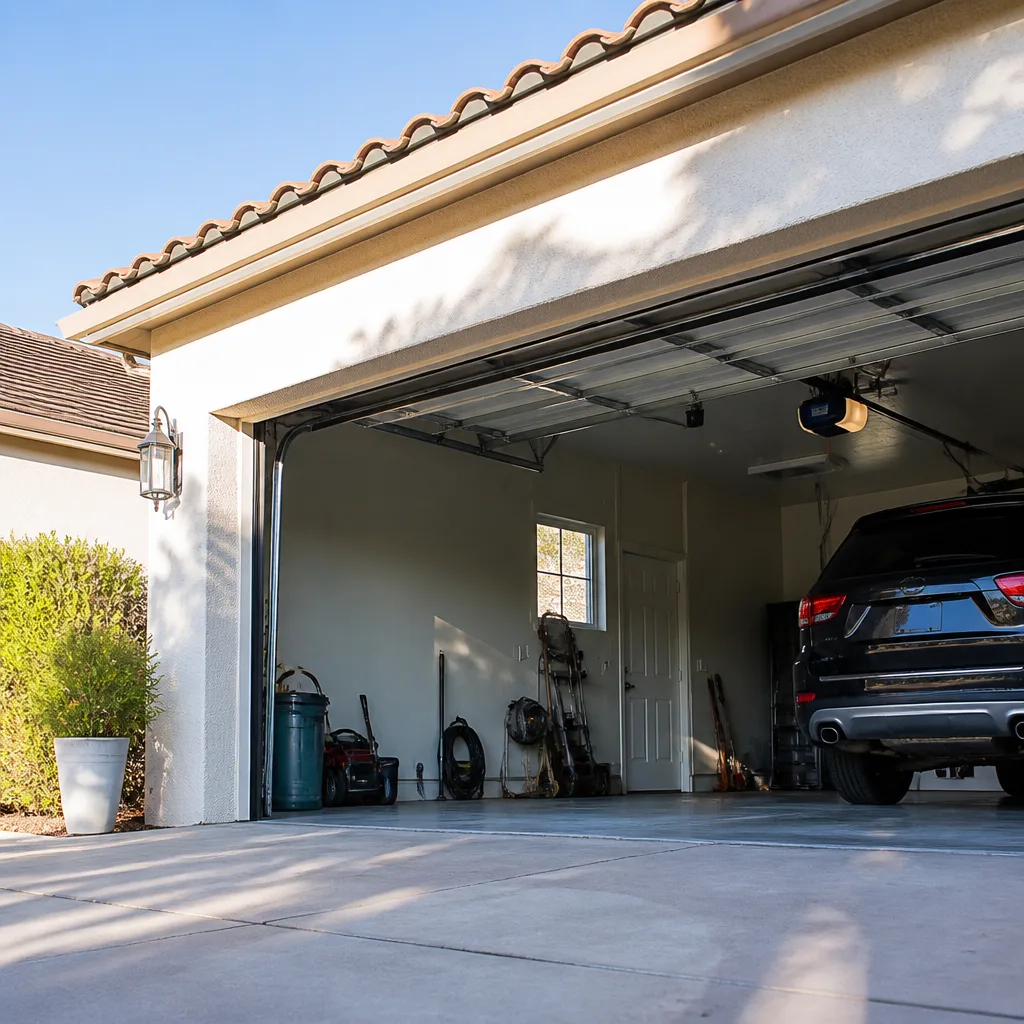
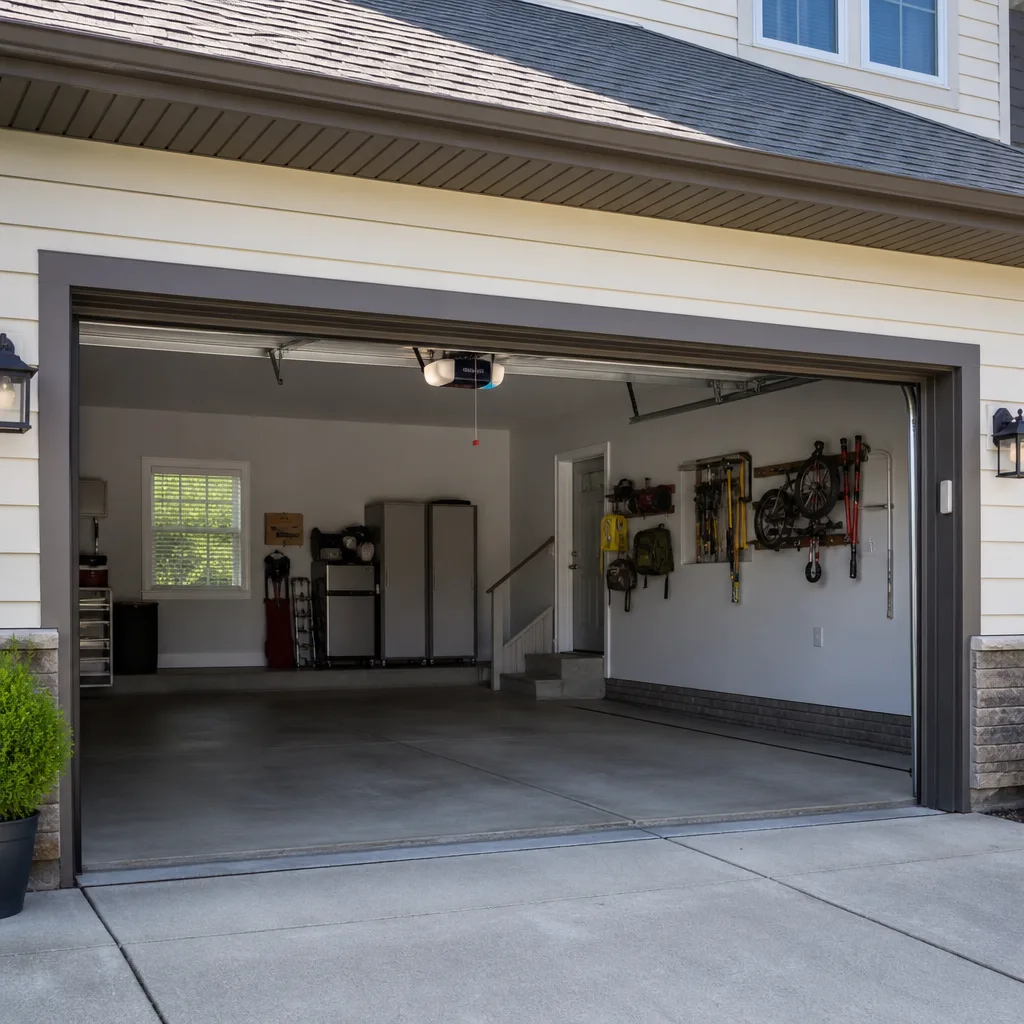
 Before
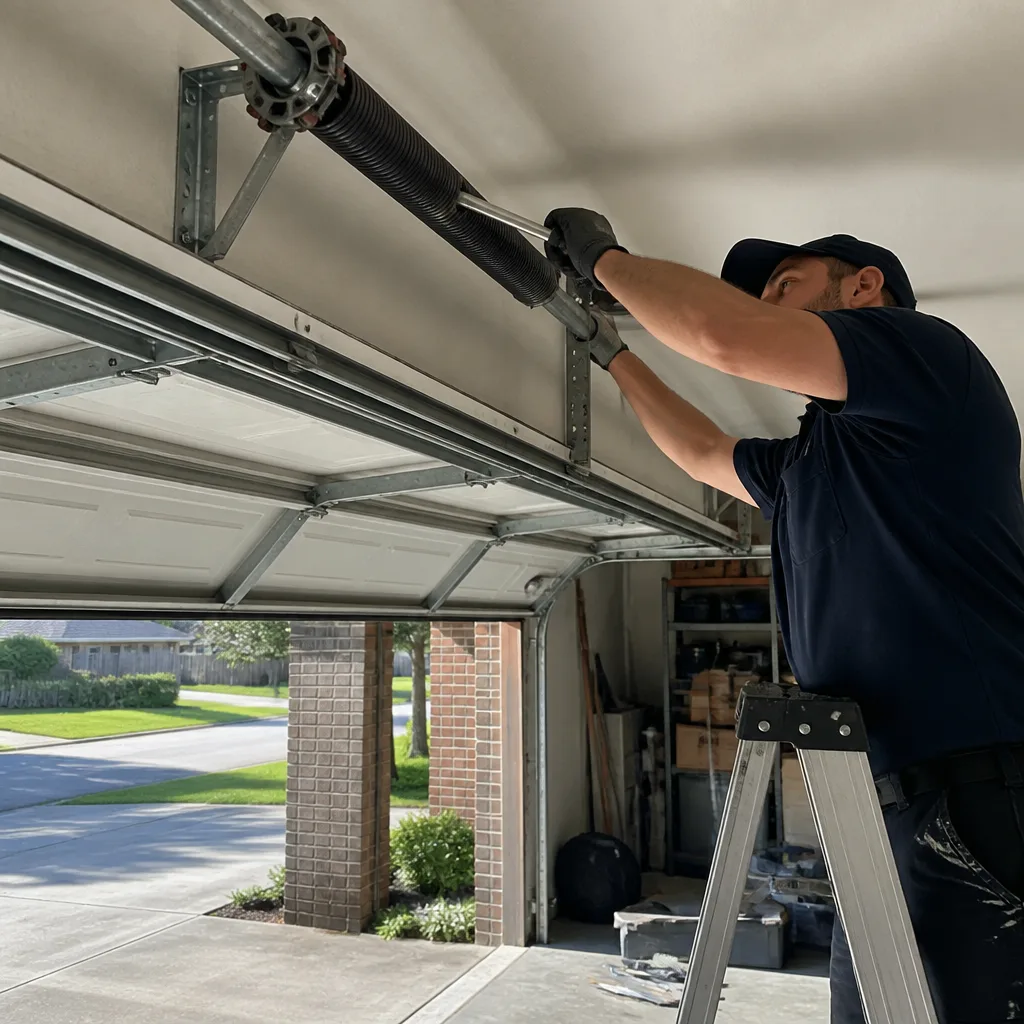 After
After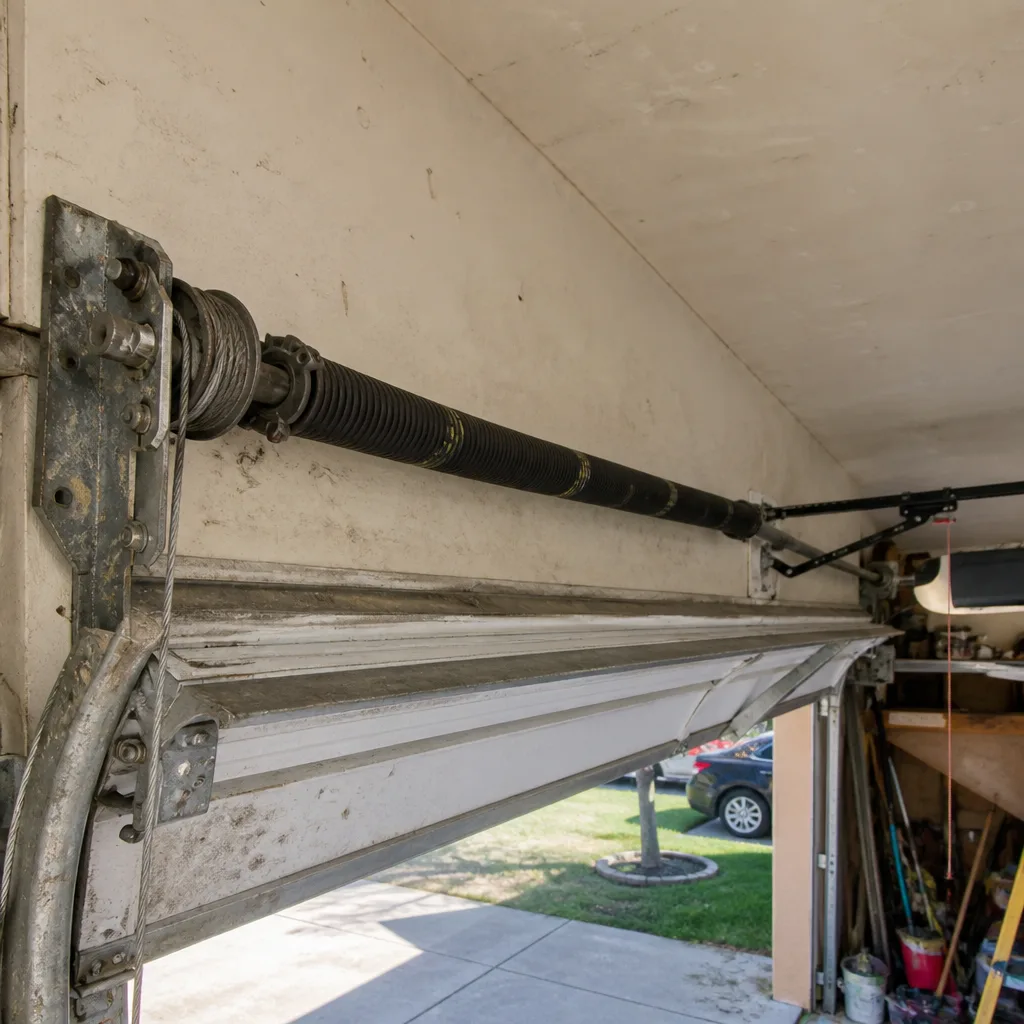 Before
 After
After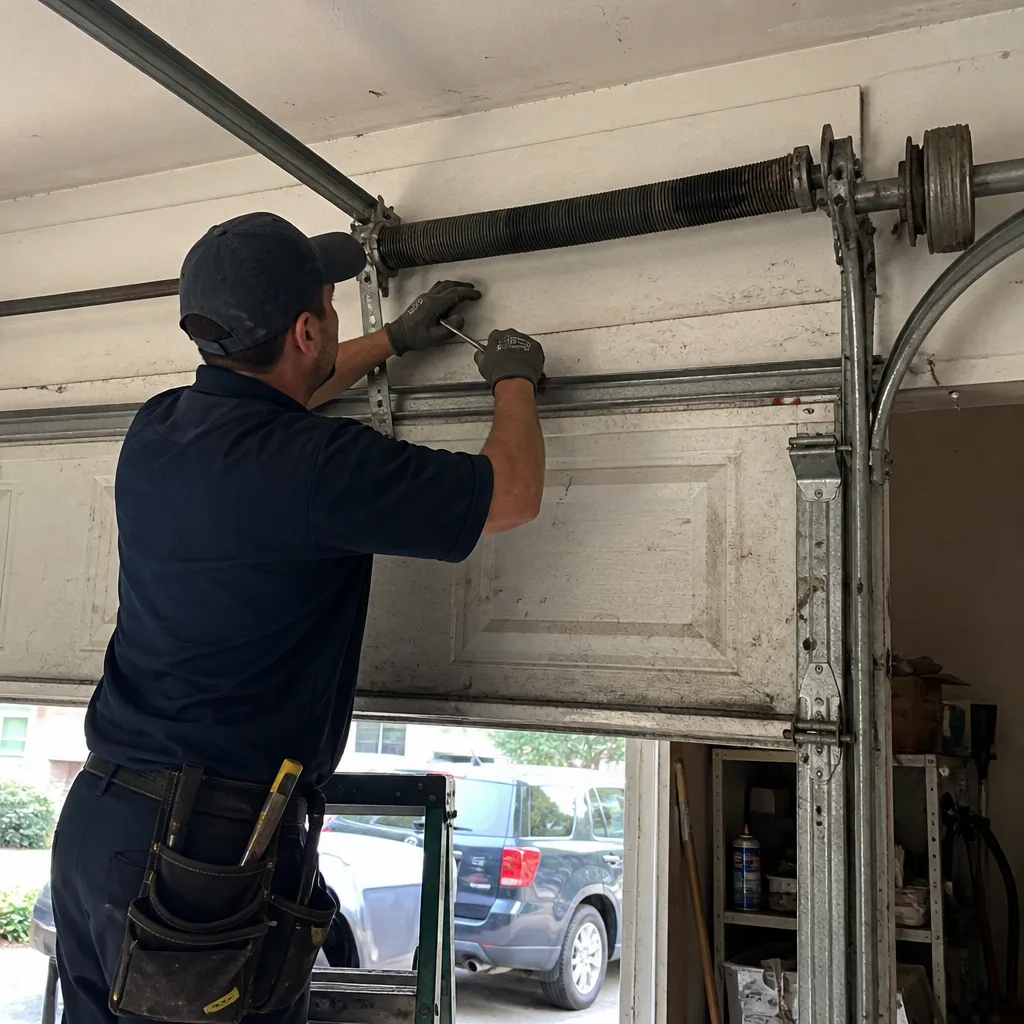 Before
 After
AfterDIY vs Professional Garage Door: The Atascocita Homeowner’s Decision Guide
Most garage door guides in Atascocita start with a warning about danger and end with a phone number. That’s backward. The real question isn’t whether you’re handy enough. It’s whether the task you want to tackle sits on the legal and financial side of the line where your homeowner’s insurance still covers you. In Texas, that line is sharper than most people realize. A homeowner can legally replace panels, weatherseal, and even an opener. But adjust a torsion spring or release a cable under tension, and you’re working on a stored-energy device that most policies exclude from self-performed mechanical coverage. This guide maps exactly which tasks belong on which side of that line, what they actually cost in time and tools, and how to use documentation to lower your bill even when you hire out. For a deeper dive into pricing, see our Garage Door Cost Breakdown: The Atascocita Homeowner’s Reference for 2026.
Quick Answer
Atascocita homeowners can safely DIY bottom seal replacement, decorative hardware installation, and opener swap-outs with basic tools and 20-90 minutes. Torsion spring adjustment, cable replacement on a live system, and track realignment on a loaded door should be handled by a TDLR-licensed technician, both for safety and because self-performed work on stored-energy components may void your homeowner’s insurance coverage for related damage or injury. A hybrid approach, using photos and measurements to document the problem before calling, typically reduces professional labor time and cost by 15-25%.
Table of Contents
- The Texas Regulatory Line: What You Can Legally Self-Perform
- DIY Task Matrix: Time, Tools, and Honest Difficulty
- Parts Access Reality: Retail vs. Professional-Grade Components
- The Hidden Cost of DIY Errors in Atascocita’s Climate
- The Hybrid Approach: Using Documentation to Lower Pro Costs
- Insurance, Liability, and the Stored-Energy Exclusion
- When to Call a Professional
- Frequently Asked Questions
 Before
 After
AfterThe Texas Regulatory Line: What You Can Legally Self-Perform
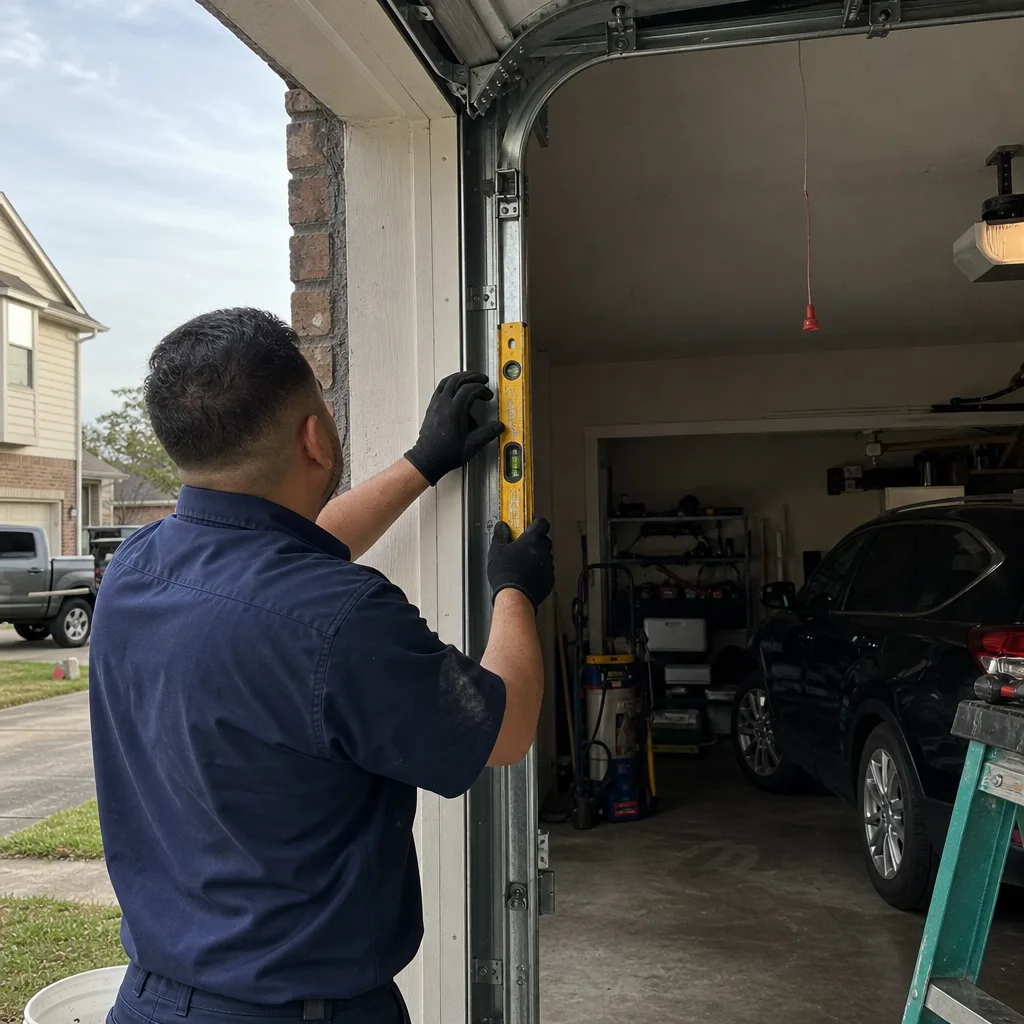
Texas does not require a state license to work on your own garage door. The Texas Department of Licensing and Regulation (TDLR) regulates garage door installers and repair technicians who work for pay, but the homeowner exemption is broad. You can replace panels, install decorative hardware, swap rollers on a door that’s fully lowered and secured, replace the bottom seal, and even install a new opener without touching a regulatory tripwire. For details on when permits apply, read Garage Door Permits, Codes & Inspections in TX: What You Need to Know.
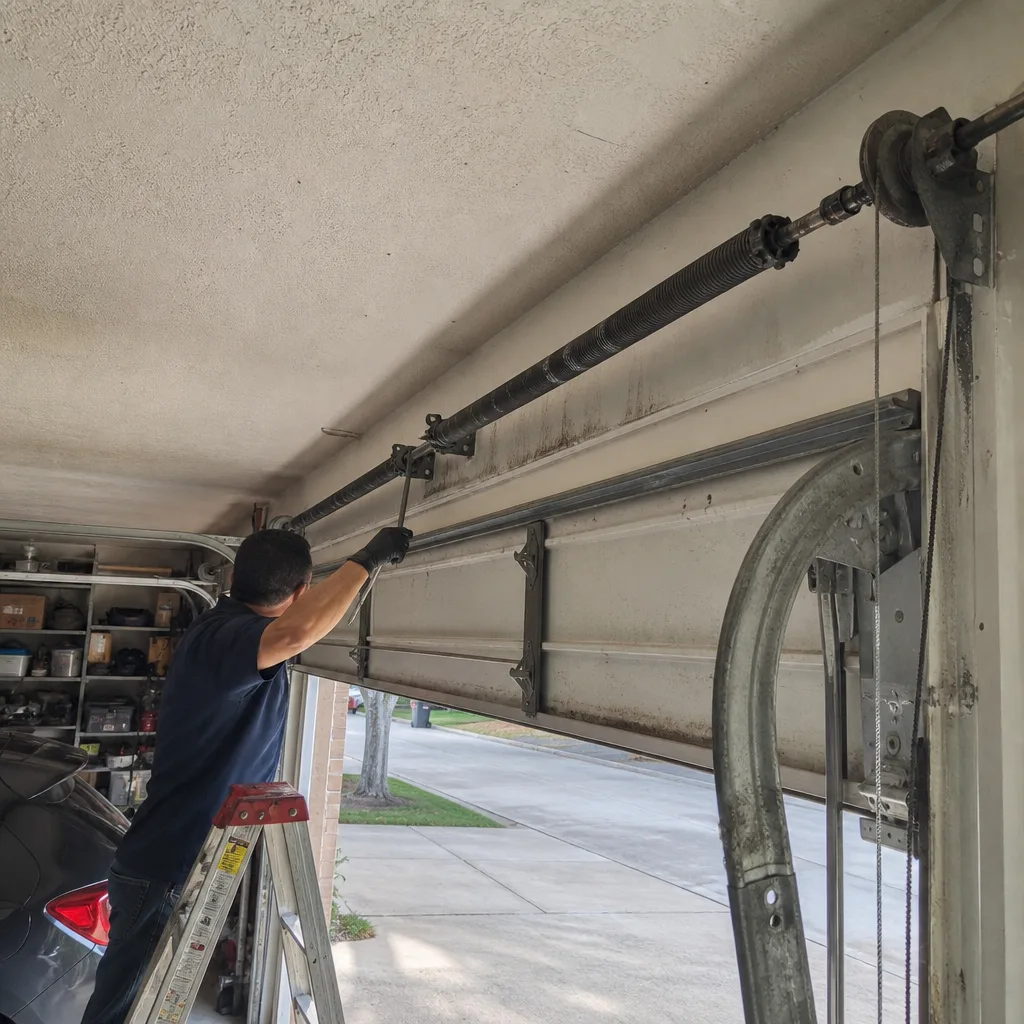
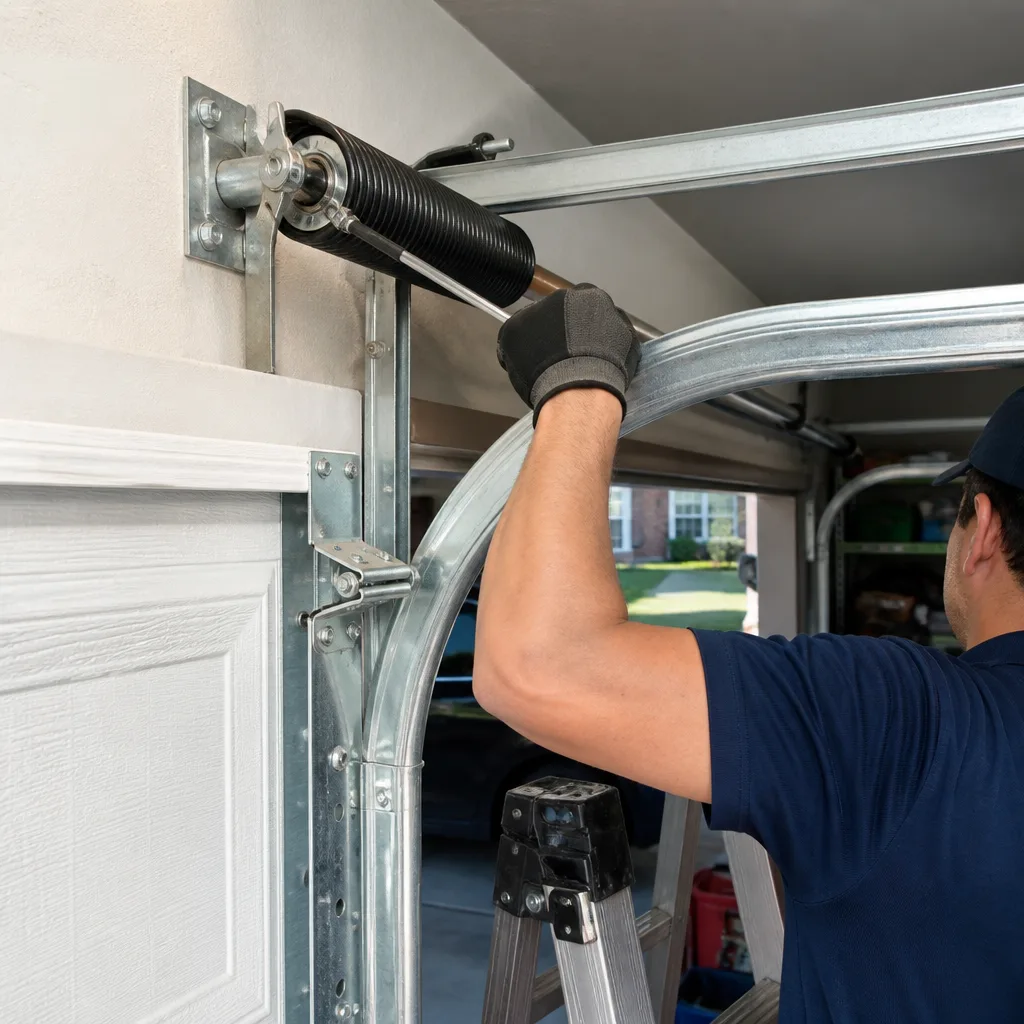
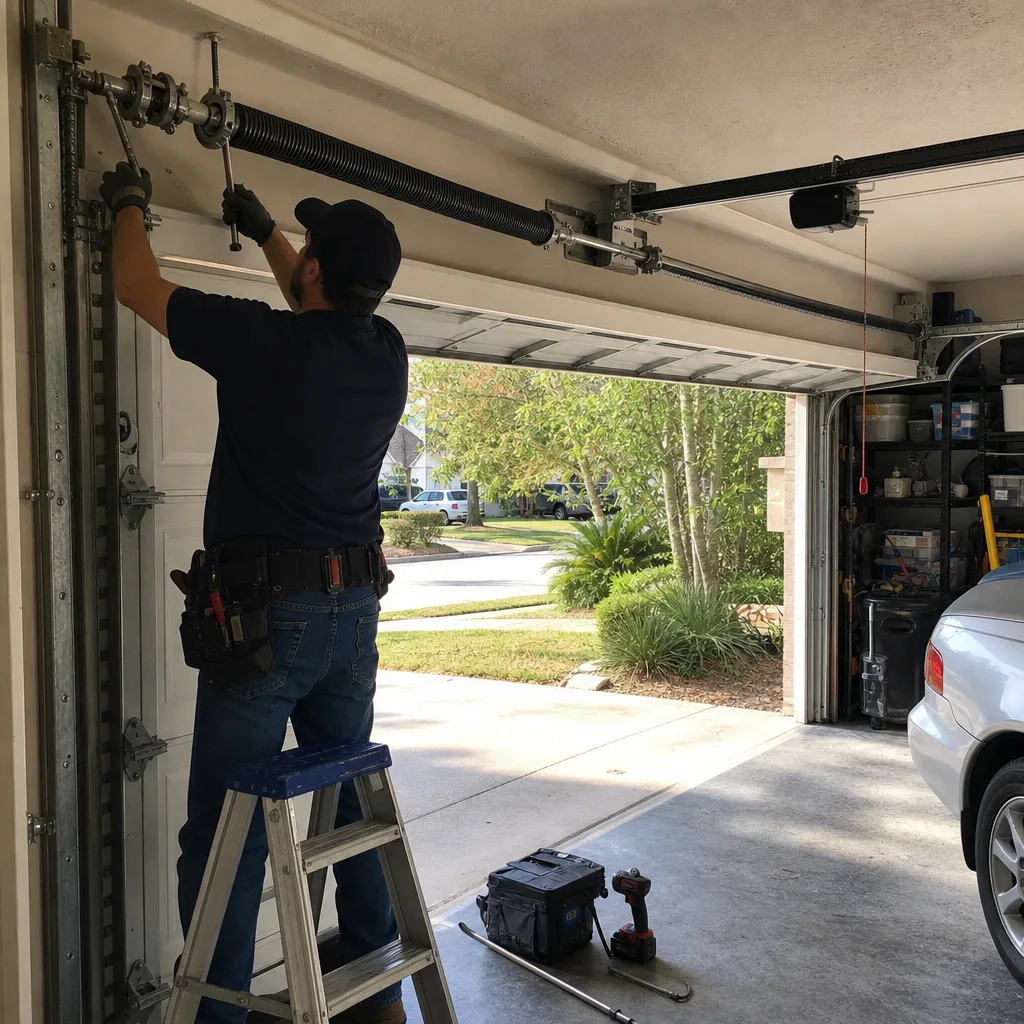
The boundary appears when you work on components under stored mechanical energy. A torsion spring system holds roughly 100-200 foot-pounds of torque when the door is closed. That’s not a figure from a safety brochure. It’s the energy required to lift a 150-400 pound door. Release that energy incorrectly, and the winding bar becomes a projectile. The cable, under equal tension, can whip across the garage with enough force to fracture bone.
Here’s where insurance enters the calculation. Most Texas homeowner’s policies contain a self-performed work exclusion for mechanical devices under stored energy. The language varies by carrier, but the pattern is consistent: injury or property damage resulting from the homeowner’s repair or adjustment of a spring, cable, or counterbalance system is excluded from liability and medical coverage. We’ve reviewed policy documents from major carriers writing in Harris County, and the exclusion appears in roughly 80% of standard HO-3 policies. It does not matter that you own the home. It does not matter that the work was done carefully. The exclusion turns on the nature of the component, not the quality of the work.
This is not a scare tactic. It’s the policy language, and it’s why we treat torsion spring work as a bright line in our recommendations to Atascocita homeowners. The legal right to do the work yourself does not erase the financial consequences if something goes wrong.
For paid work, TDLR requires a Garage Door Installer license. At Servo Garage Doors Atascocita home, our technicians carry this license, and the number is available on request. Clause 4 of The Haven Standard requires that the technician photograph the failed component before quoting replacement, so the customer sees the evidence before any price is named.
DIY Task Matrix: Time, Tools, and Honest Difficulty
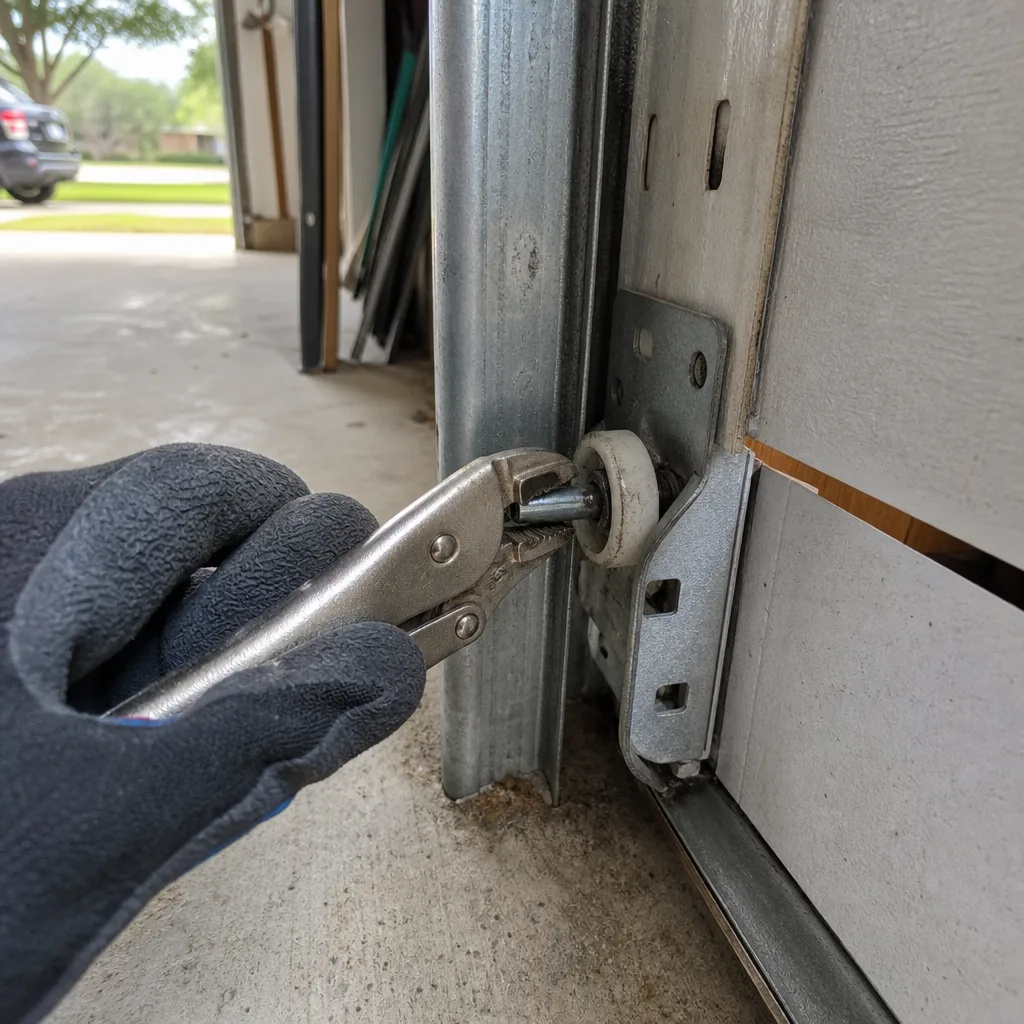
Some garage door work is genuinely accessible to a homeowner with a drill, a level, and patience. Other tasks require specialized tools that cost more than the labor you’d pay a professional. Below is an honest assessment of what we’ve seen work and fail in Atascocita homes.
Bottom Seal Replacement
Time: 20-30 minutes
Tools: Flathead screwdriver, utility knife, possibly silicone spray
Parts cost: $15-$35 for standard vinyl or rubber seal at Home Depot or Lowe’s in Humble
Skill level: Beginner
The bottom seal slides into a retainer channel across the door’s bottom edge. In Atascocita, we see accelerated wear from UV exposure and the occasional flooding event in lower-lying neighborhoods near Lake Houston. The seal hardens and cracks. Replacement is straightforward: pull the old seal, clean the channel, lubricate lightly, feed the new seal from one end. The only trick is buying the correct width, 3-inch or 4-inch, matching your retainer. Measure before you shop.
Panel Replacement (Single Section)
Time: 45-75 minutes
Tools: Cordless drill, panel alignment tool or long level, C-clamps, helper recommended
Parts cost: $120-$280 for steel panel; $200-$450 for insulated or custom-match
Skill level: Intermediate
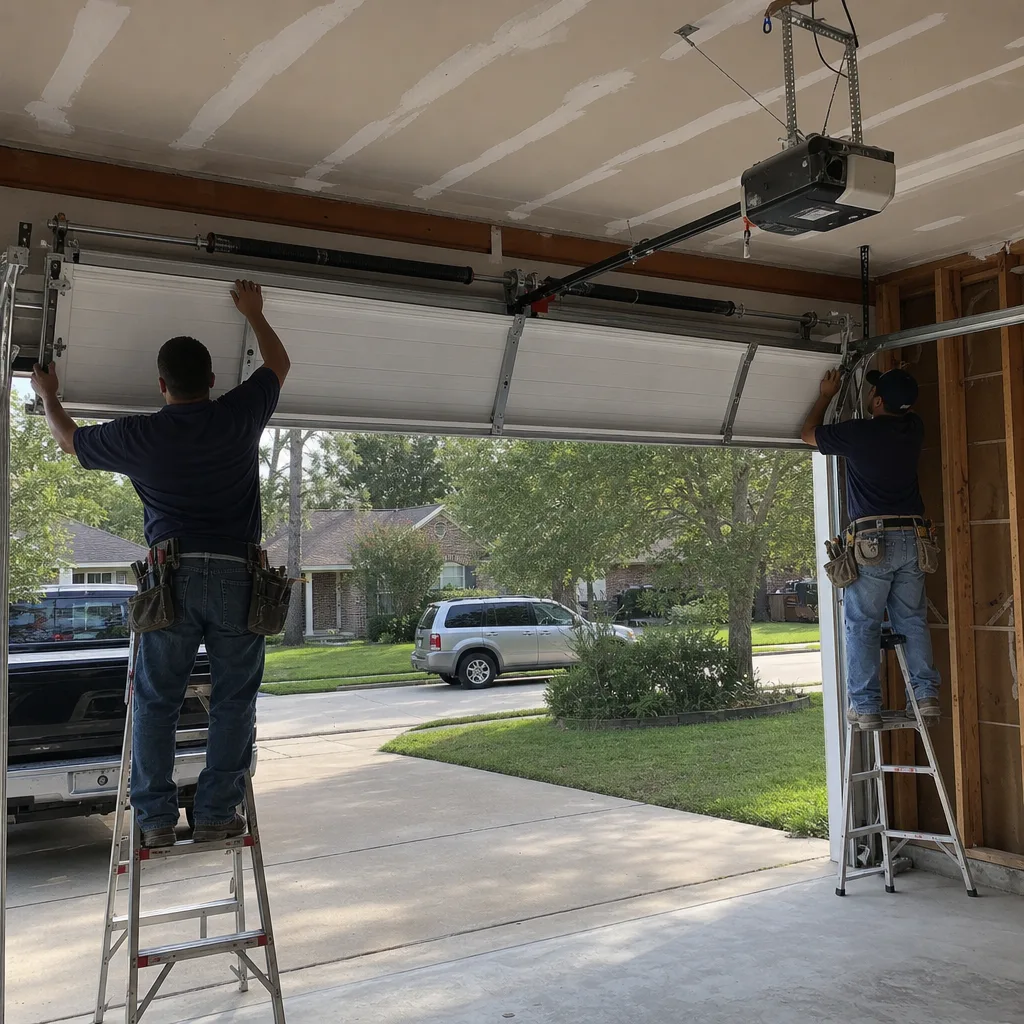
A single damaged panel on a sectional door can be swapped without disturbing the spring system if the door is fully lowered and the opener is disconnected. The risk is alignment. A panel that’s even 1/8-inch out of plane will stress the hinges and rollers, accelerating wear. The panel alignment tool, essentially a long bar with adjustment screws, runs $80-$120 if you don’t own one. For a single panel on a common door size, a professional charges $180-$350 including labor and alignment. The math depends on whether you value your Saturday morning and whether you own the tool already.
Opener Installation (Replacement, Not New Construction)
Time: 90-150 minutes
Tools: Stepladder, drill, level, wire strippers, smartphone for app setup
Parts cost: $180-$450 for chain-drive or belt-drive unit at retail
Skill level: Intermediate to advanced
Replacing an existing opener is easier than a fresh install because the header bracket and electrical outlet are already positioned. The work involves: removing the old unit, hanging the new motor assembly, attaching the rail and trolley, connecting the door arm, wiring the safety sensors, and programming limits and remotes. The limit switch, which tells the opener when to stop, requires careful adjustment. Set it too far, and the motor strains against the door in the closed position. Set it too short, and the door reverses before sealing.
In Atascocita’s newer subdivisions, we see a lot of Wayne Dalton and LiftMaster units installed by builders between 2015 and 2022. These use proprietary rail lengths and header bracket spacing. A replacement opener from a different brand may require relocating the header bracket, which means drilling into structural lumber and verifying clearance. If your existing opener is a Wayne Dalton Quantum or a LiftMaster Elite Series, staying within the brand family reduces installation complexity significantly.
Tasks We Do Not Recommend for DIY
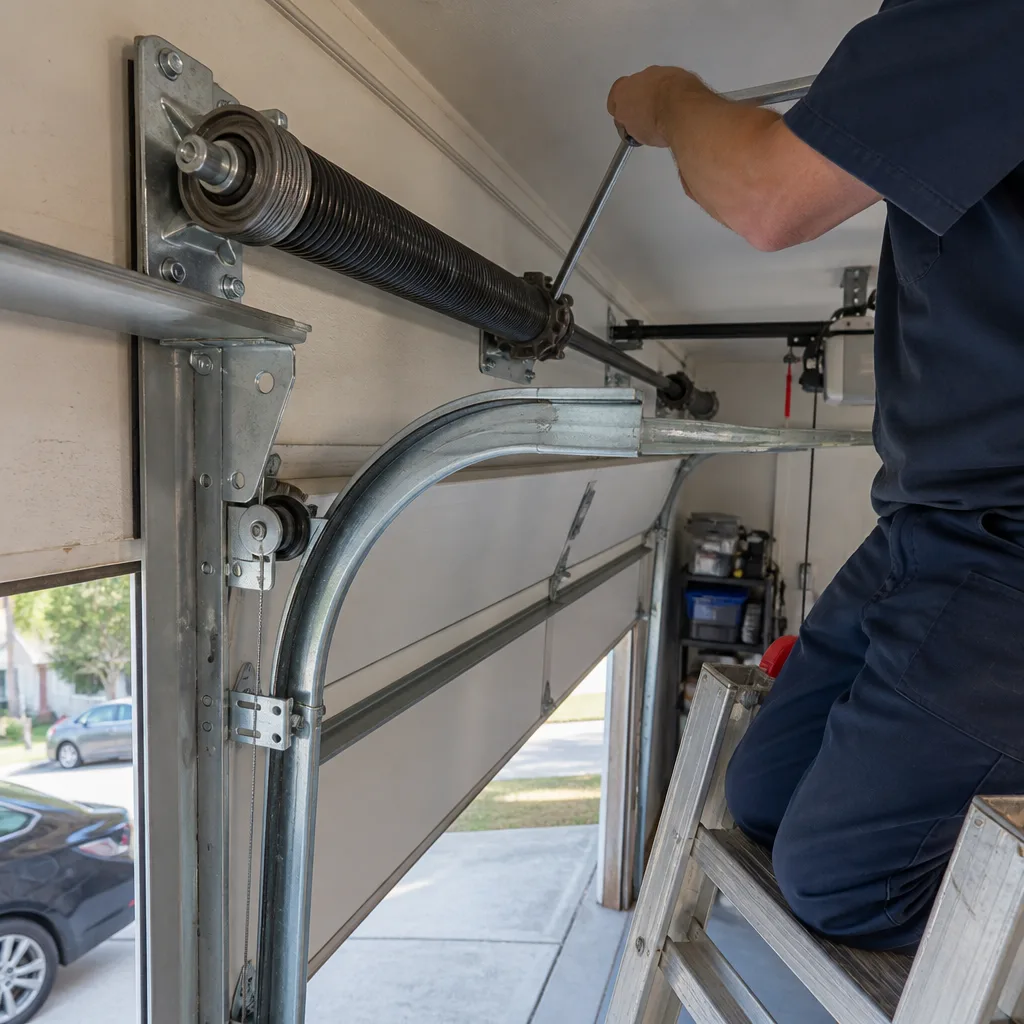
- Torsion spring adjustment or replacement: Requires winding bars inserted into a loaded spring. Incorrect technique causes sudden release of stored energy. Specialized tools include winding bars, vice grips, and a torsion spring winding chart matched to door weight and drum size.
- Cable replacement on a live system: Cables are under equal tension to the spring. A slipped cable whips unpredictably. The door must be clamped, the spring unwound, and the cable replaced with the system at zero energy.
- Track realignment on a loaded door: A door that’s off-track is often off-track because a cable has slipped or a spring has broken. The load is unbalanced. Attempting to force the door back into the track risks collapse of the entire system.
- Bottom bracket replacement: The bottom bracket attaches the cable to the door and is under spring tension. This is not a bolt-on hardware swap. It requires releasing the cable tension first.
Parts Access Reality: Retail vs. Professional-Grade Components
The parts you can buy at Home Depot on FM 1960 are not the same parts a professional technician carries. They’re not necessarily worse for every application, but the differences matter for components that cycle 1,000-2,000 times per year.
What’s Available at Retail
Big-box stores stock standard rollers (nylon or steel, 2-inch stem), bottom seal in common widths, decorative hinges and handles, and a limited selection of extension springs for lighter doors. Opener accessories, remotes, and safety sensors for major brands like LiftMaster, Chamberlain, and Craftsman are usually available. What you won’t find: torsion springs in the wire diameters and lengths common in Atascocita homes, professional-grade cycle-rated springs, or cables with the correct fittings for Wayne Dalton, Raynor, or Clopay bottom brackets.
The Torsion Spring Gap
A torsion spring has two critical specifications: wire diameter (measured in thousandths of an inch, e.g., 0.250) and cycle rating (typically 10,000, 25,000, or 50,000 cycles). The spring at Home Depot labeled “for 8-foot door, 150 pounds” is a generic approximation. It may be close. It may not. A spring that’s 0.012 inch off in wire diameter, or two inches long in body length, will either over-torque the opener or under-balance the door.
More importantly, retail springs are typically 10,000-cycle rated. The professional-grade springs we install are 25,000-cycle rated minimum, with 50,000-cycle options available. At 1,500 cycles per year, that’s the difference between 6-7 years and 16-17 years of service life. The price difference is $40-$80 in parts cost, but the labor to replace a spring is identical whether the spring lasts 6 years or 16. Over the life of the door, the cheaper spring costs more.
Opener Logic Boards and OEM Parts
When an opener fails, the problem is often the logic board, the circuit that controls motor direction, force sensing, and safety input. Retail channels rarely stock logic boards. They’re available through manufacturer distribution or professional supply houses. A generic “universal” replacement board exists for some models, but we’ve seen compatibility issues with Craftsman and Raynor openers from the 2015-2019 era that require OEM programming. The wrong board may run the motor but fail to recognize the safety sensors, causing the door to reverse randomly or ignore obstruction signals.
Our Recommendation on Parts Sourcing
For consumables like seal and rollers, retail parts are fine. For anything that affects balance, safety, or electronic control, the 15-20% savings on a generic part is usually erased by reduced lifespan or compatibility problems. When we quote Garage Door Repair in Atascocita, we specify the part by manufacturer and rating, and the customer receives that specification in writing before work starts, per Clause 1 of The Haven Standard.
The Hidden Cost of DIY Errors in Atascocita’s Climate
Atascocita’s climate is harder on garage doors than most homeowners account for. The combination of high summer humidity, rapid temperature swings in spring and fall, and occasional hard freezes creates specific failure modes that a DIY repair can accidentally accelerate.
The Humidity-Cable Interaction
An incorrectly tensioned spring, whether too tight or too loose, changes the load distribution across the cable drums. In high-humidity conditions, the cable develops micro-corrosion at the points of highest flex stress, typically where it wraps the drum and where it enters the bottom bracket. A spring that’s 10% over-tensioned increases cable flex cycles by roughly 15% per door operation. In Atascocita’s humidity, that translates to visible cable fraying in 12-18 months instead of 4-6 years.
We’ve documented this pattern in neighborhoods near the San Jacinto River watershed, where humidity runs higher than the Houston average. A homeowner who replaced their own spring in 2022 using a generic 10,000-cycle unit called us in 2024 with a cable failure. The spring was still functional but had sagged below proper torque. The cable, stressed by the imbalance, had frayed through 40% of its strands. The repair cost: $220 for cable replacement, $180 for spring re-tensioning and replacement with a properly rated unit. The “free” DIY spring replacement became a $400 correction.
Thermal Expansion and Track Alignment
Steel tracks expand and contract with temperature. A track that’s hand-tightened without torque specification, or aligned by eye rather than with a level, will drift as thermal cycles work the fasteners loose. In Atascocita, a 30-degree temperature swing between night and day in March or October is common. Over two seasons, a track that’s 1/4-inch out of plumb becomes a track that binds the rollers and wears the hinges. The homeowner notices the door “getting noisy.” By the time they call, the hinge pins are wallowed and the rollers have flat spots. The repair escalates from a track adjustment to hinge replacement, roller replacement, and possibly panel damage from the binding.
The Freeze-Thaw Factor on Seals
Atascocita’s occasional hard freeze, most recently in February 2021, turns a worn bottom seal into a liability. A seal that’s cracked or poorly seated allows water to pool at the door base. Freeze, and the door freezes to the concrete. The homeowner, impatient, hits the opener button. The opener, sensing resistance, may trip the force limit and reverse, or it may strain the trolley carriage to failure. We’ve replaced trolley carriages and stripped drive gears after freeze events, always on doors with visible seal deterioration that went unaddressed. A $25 seal, installed in 20 minutes, prevents a $280 opener repair.
The Hybrid Approach: Using Documentation to Lower Pro Costs
The most cost-effective approach for many Atascocita homeowners is not pure DIY or pure professional service. It’s a hybrid: you perform the diagnostic documentation, and you hire the professional for the regulated work, with your documentation reducing their labor time and your bill.
Step 1: Photograph Before You Touch Anything
Use your phone to document the problem from multiple angles. For a suspected spring issue: photo the spring from each end, showing the winding cone and stationary cone. Photo the cable where it enters the drum and the bottom bracket. Photo the door in the closed position, showing any gap at the bottom that indicates imbalance. For an opener issue: photo the model number label on the motor unit, the safety sensor alignment lights, and any flashing error code on the wall button.
This is exactly what our technicians do under Clause 4 of The Haven Standard. When a customer arrives with equivalent documentation, we can often diagnose over the phone and arrive with the correct parts, eliminating a return trip. A two-trip repair becomes a single visit. The savings is 30-60 minutes of labor, typically $75-$150.
Step 2: Measure and Record Specifications
For spring replacement, the critical measurements are: door width and height, model number if visible on the door, and approximate door weight (we can estimate from dimensions and material). For opener replacement: brand, model number, rail length, and whether the door is standard lift or high lift. For panel replacement: door width, height, number of sections, and color code if available on the edge of an unexposed panel.
Step 3: Obtain a Written Second Opinion
If another company has already quoted the repair, bring that written estimate to us. Our Free Second Opinion, with no coupon or code required, means we’ll inspect the door, verify the diagnosis, and quote our own flat price. If the diagnoses match, you have price transparency. If they don’t, you have information. Either way, the documentation you gathered protects you from upsells based on claims you can’t verify.
We’ve had Atascocita homeowners arrive with competitor quotes for full spring and cable replacement when only one spring was failed, or for opener replacement when the issue was a $35 safety sensor. The written second opinion exists precisely because these discrepancies happen regularly.
Step 4: Request the Photo Record
Whether you hire Servo or another licensed technician, ask for photographic documentation of what was found and what was done. A professional who can’t or won’t provide this is asking for trust without evidence. The photo record is your warranty documentation if the same component fails again, and it’s your proof of proper installation if you sell the home. We include it on every visit, automatically, because it was the founding rule of this business in 2015.
Insurance, Liability, and the Stored-Energy Exclusion
We’ve referenced the insurance exclusion throughout this guide. Here is the specific language homeowners should look for in their policy documents.
Where to Find It
The exclusion typically appears in Section I, Conditions, under “Neglect” or “Intentional Loss,” or in endorsements specific to mechanical systems. Search your policy PDF for terms like “self-performed,” “mechanical device,” “stored energy,” “spring,” or “counterbalance.” The exact wording varies, but the structure is consistent: the insurer will not pay for bodily injury or property damage arising from the insured’s repair, maintenance, or adjustment of any mechanical system under tension or stored energy.
What It Means in Practice
If you adjust your own torsion spring and the winding bar slips, causing the bar to strike your hand or the spring to damage your vehicle, your medical payments coverage and property damage liability may not respond. You pay out of pocket. If the released spring damages a neighbor’s property, your liability coverage may not respond. You pay out of pocket, and you may be sued directly.
This is distinct from normal homeowner negligence. If a tree falls on your garage, that’s covered. If a contractor’s employee is injured, that’s covered by the contractor’s insurance. The exclusion is specific to your own hands-on work with certain mechanical systems. It exists because insurers have actuarial data showing that homeowner-performed spring and cable work generates claims at rates far above professional work.
The Contractor’s Insurance as Your Shield
A TDLR-licensed garage door contractor carries general liability and workers’ compensation insurance. When Servo technicians perform spring replacement in Atascocita, our insurance covers injury to our employees and damage to your property. The risk is professionally underwritten and priced. You are not exposed. This is part of what you purchase when you hire licensed work, and it’s why the true cost comparison between DIY and professional service must include the value of transferred risk.
When to Call a Professional
Call a licensed technician when the task involves stored energy, when the door is off-track and loaded, when the opener is behaving erratically and you cannot identify the cause, or when you’ve attempted a repair and the door still doesn’t operate correctly. For more guides & resources, visit our blog. The cost of a callback to fix a DIY attempt is almost always higher than the original professional repair would have been.
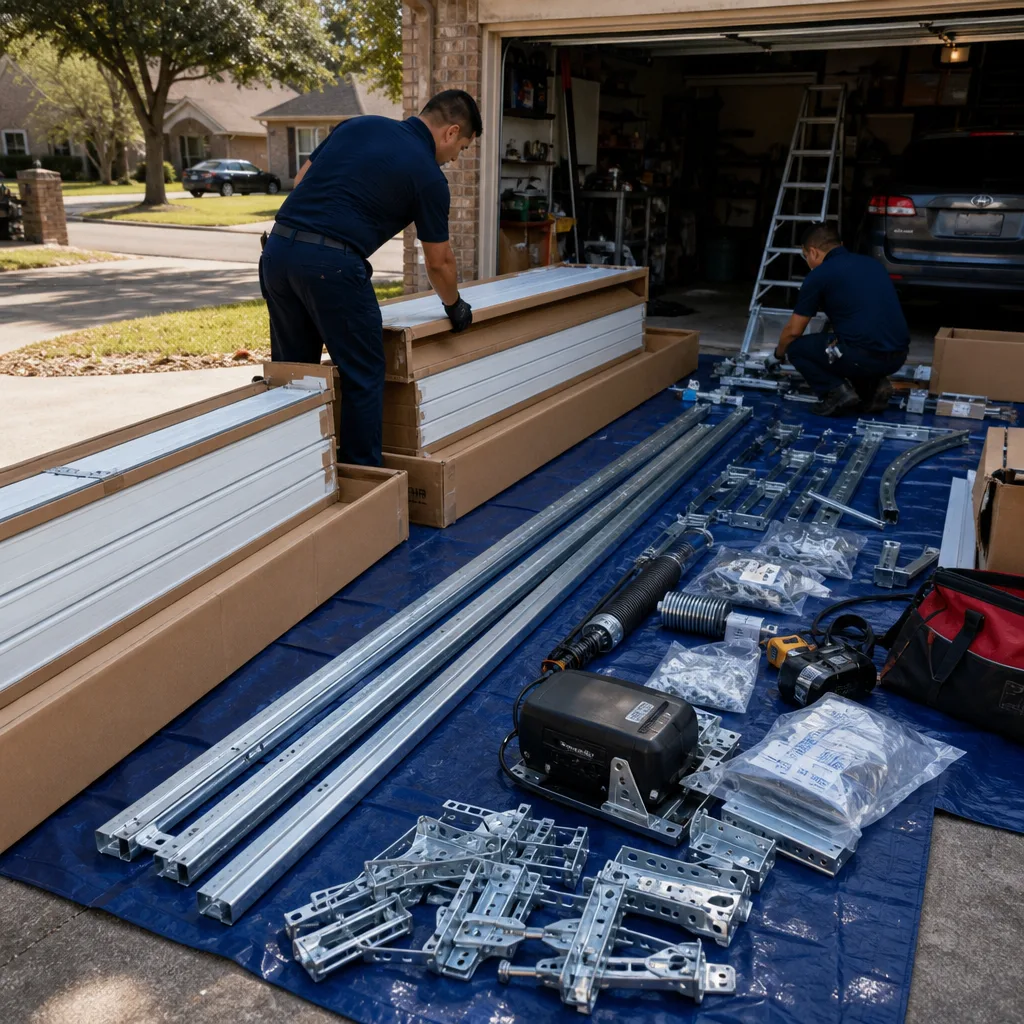
Garage Door Installation in Atascocita and replacement projects should always involve professional measurement and ordering. Door sizes are not truly standard, opener rail lengths vary by brand, and the spring calculation requires door weight and drum geometry that most homeowners don’t have tools to measure accurately.
Servo Garage Doors Atascocita offers free estimates in Atascocita. Call (346) 616-9278, and a live person will answer, 24 hours a day. We’ll name a two-hour arrival window, send an on-the-way text with the technician’s name, and provide a flat, written price before any work starts. Clause 1 of The Haven Standard guarantees it.
Frequently Asked Questions
Professional torsion spring replacement in Atascocita typically ranges from $180 to $340 for a single spring, and $280 to $480 for a dual-spring system, including parts, labor, and warranty. The price varies with spring cycle rating (10,000 vs. 25,000 vs. 50,000 cycles) and whether the cables or drums require replacement due to wear. We quote the exact price after inspection, in writing, before any work begins. Call (346) 616-9278 for a free estimate.
Yes, Texas law does not prohibit homeowners from working on their own garage doors, including spring replacement. However, most homeowner’s insurance policies contain a self-performed work exclusion for stored-energy mechanical devices, meaning injury or damage from DIY spring work may not be covered. The legal right to do the work and the financial protection for doing it are separate questions.
A straightforward opener replacement, where the header bracket and electrical outlet are already positioned, takes 90 to 150 minutes for a homeowner with basic tools and some comfort with ladder work and low-voltage wiring. A fresh installation in a garage without existing opener mounting requires 3-5 hours and involves structural drilling, possible electrical outlet installation, and precise rail alignment. If your existing opener is a Wayne Dalton or LiftMaster unit, staying within the same brand family significantly reduces installation complexity.
No. At Servo Garage Doors Atascocita, the price we quote after inspection is the price you pay. Clause 1 of The Haven Standard requires a flat, written price and written scope before any work starts. If we discover additional problems during the repair, we document them, explain them, and quote them separately. You approve each scope before we proceed. There are no post-work surprises.
Our technicians arrive with a full inventory of common springs, cables, rollers, hinges, and opener components for all major brands including LiftMaster, Chamberlain, Genie, Clopay, Amarr, Wayne Dalton, Craftsman, and Raynor. Specialty colors, custom panel sizes, or specific wood-grain finishes may require ordering. If a part is not on the truck, we tell you the lead time before any commitment, and we do not charge for a return trip to install ordered parts.
The cycle rating indicates how many open-close operations the spring is engineered to perform before metal fatigue causes failure. A 10,000-cycle spring lasts roughly 6-7 years at average use. A 25,000-cycle spring lasts 16-17 years. The price difference is typically $40-$80 in parts, with identical labor cost for installation. Over the life of the door, the higher-cycle spring has lower annualized cost and fewer disruption events. We recommend 25,000-cycle minimum for all Atascocita homes, and 50,000-cycle for doors that cycle more than 2,000 times per year.
The Bottom Line
The DIY-versus-professional question for Atascocita homeowners is not primarily about skill. It’s about legal boundaries, insurance coverage, and the true cost of parts quality. Bottom seal replacement and opener swaps are genuinely accessible DIY tasks. Torsion spring and cable work crosses into territory where the risk transfer of professional service is worth more than the labor savings. For everything in between, the hybrid approach, using your own documentation to reduce professional labor time, offers the best balance of cost control and risk management. Whatever path you choose, get the specification in writing, understand what your insurance covers, and never work on a loaded door without securing it first.
Written by Marcus Deller, Owner at Servo Garage Doors Atascocita, serving Atascocita since 2015.